 Robert Kim
Most borrowers ask the wrong question. They spend hours watching rate trackers and refreshing mortgage news sites, waiting for the perfect moment to lock, as if they’re trying to time the stock market. The real question isn’t “when will rates be lowest?” It’s “when do I need certainty, and what does certainty cost me?”
Those are very different questions. The first one is unanswerable. The second one you can actually work with.
I spent sixteen years reading rate sheets, talking to secondary market desks, and watching borrowers make expensive decisions based on vague advice from loan officers who had every incentive to get the file moving. Here’s what I actually know about rate locks, and what most articles on this topic quietly skip over.
What a Rate Lock Actually Is (And What It Isn’t)
A rate lock is a written commitment from your lender that a specific interest rate and, critically, a specific set of loan terms will be held for you for a defined period, typically 30, 45, or 60 days, sometimes longer. That’s it. It’s not a guarantee your loan closes. It’s not a guarantee those are the best terms available. It’s a guarantee that if your loan closes within the lock window under the conditions stated, you won’t pay more on the rate than agreed.
The part loan officers often skim past: lock agreements have expiration dates, and if your loan doesn’t close in time, you’re exposed. Either your lock expires and you float back to market rates, or you pay to extend it. Extensions aren’t free. Depending on the lender, a one-week extension might run you 0.125% to 0.25% of the loan amount. On a $400,000 mortgage, that’s $500 to $1,000 for a week’s buffer.
There’s also a float-down provision some lenders offer. A float-down lets you lock today but capture a lower rate if rates drop before closing. Sounds perfect, right? It costs extra, usually 0.5% to 1% of the loan amount upfront, and comes with conditions: rates typically have to fall by a minimum threshold (often 0.25% or more) before the provision kicks in. It’s not always worth it. If you’re already comfortable with your rate and your closing timeline is tight, you might be paying for an option you’ll never use.
When to Lock: The Honest Answer
| Scenario | Lock Period | Typical Cost vs. 30-Day | Best For | Risk |
|---|---|---|---|---|
| Standard purchase | 30-45 days | Baseline | On-time closings, tight timelines | Lock expires if closing delays |
| Purchase with buffer | 60 days | +0.125% to +0.25% | Contingencies, appraisal delays | Higher rate cost, extension fees if needed |
| New construction | 90-360 days | Significantly higher | Homes not yet completed | Expensive carry cost, rate risk if market falls |
| Refinance (floating) | Flexible | Lower upfront | Rate shopping, market monitoring | Rate could move up before locking |
Lock when you have a signed purchase contract and a realistic closing date you trust.
Not when you “feel like” rates are going up. Not the first day you talk to a lender. Not after you’ve spent six weeks watching rates oscillate and convincing yourself you’ve spotted a pattern. Rate markets don’t reward retail borrowers for trying to time them. Institutional traders with Bloomberg terminals and dedicated rate desks get it wrong constantly.
What you can control is your own risk exposure. Once you have a contract, you have a closing date. That closing date creates a window. Your job is to match a lock period to that window with a small buffer built in, and then stop agonizing over whether rates will move.
The standard purchase timeline in most markets runs 30 to 45 days from contract to close. If your contract allows 45 days, a 45-day lock is tight but workable with a competent lender and a straightforward file. A 60-day lock gives you breathing room, but it costs more. Longer locks are priced into the rate itself: a 60-day lock typically runs 0.125% to 0.25% higher than a 30-day lock for the same loan. Not a lot on paper, but over 30 years on a $400,000 loan, that fraction adds up.
New construction breaks all the standard advice. If you’re buying a home that won’t be finished for five or six months, you either need an extended lock (90, 180, or 360 days, all of which are expensive) or you float until you’re closer to a real closing date and accept the rate risk. Neither option is comfortable. The Consumer Financial Protection Bureau (CFPB) has solid plain-language guidance on lock periods worth reading before you sit down with a builder’s preferred lender.
The Market Timing Trap
Interest Rate Buy Downs - How It Works And Why You Should Get It (First Time Home Buyers) · Javier Vidana on YouTube
A borrower I counseled a few years back decided not to lock in early March because he was certain rates were about to fall. He’d read several articles saying the Fed was likely to cut. He floated for three weeks. By the time he closed, his rate had moved up 0.375%. On a 30-year fixed at $350,000, that added roughly $80 a month to his payment. Over the life of the loan, that’s over $28,000 in extra interest, not accounting for any potential refinancing down the road.
He wasn’t foolish. He was doing exactly what smart, financially literate people do: confusing Fed policy predictions with mortgage rate behavior.
The Fed doesn’t set mortgage rates. It sets the federal funds rate, which influences short-term borrowing costs. Mortgage rates are tied more tightly to the 10-year Treasury yield and to mortgage-backed securities markets, which price in inflation expectations, global capital flows, and investor appetite for risk. Sometimes mortgage rates move in the same direction as Fed policy. Sometimes they move ahead of it. Occasionally they move in the opposite direction entirely.
Watching Fed meeting calendars as a proxy for rate direction is about as reliable as watching weather forecasts three weeks out.
Refinancers vs. Purchase Borrowers: Different Math
Rate lock strategy isn’t identical for everyone. If you’re refinancing, you have more flexibility. There’s no seller waiting, no contract contingencies, no real estate agent pressure. You can float a little longer, watch for a dip, and lock when you feel ready. The cost of getting it slightly wrong is lower because you’re not at risk of losing a home.
Purchase borrowers are in a different position. A rate lock gamble that goes wrong doesn’t just cost money. It can complicate your closing, strain your relationship with the seller, and in worst-case scenarios, trigger a contract default if you can’t close on time because your financing got complicated.
My general rule for purchase borrowers: lock as soon as you’re in contract and you’ve confirmed your loan program with your lender. Don’t wait to see if rates improve. The expected gain from waiting is speculative. The cost of a rate spike while you’re floating is real and immediate.
What Nobody Tells You About the Lock Confirmation
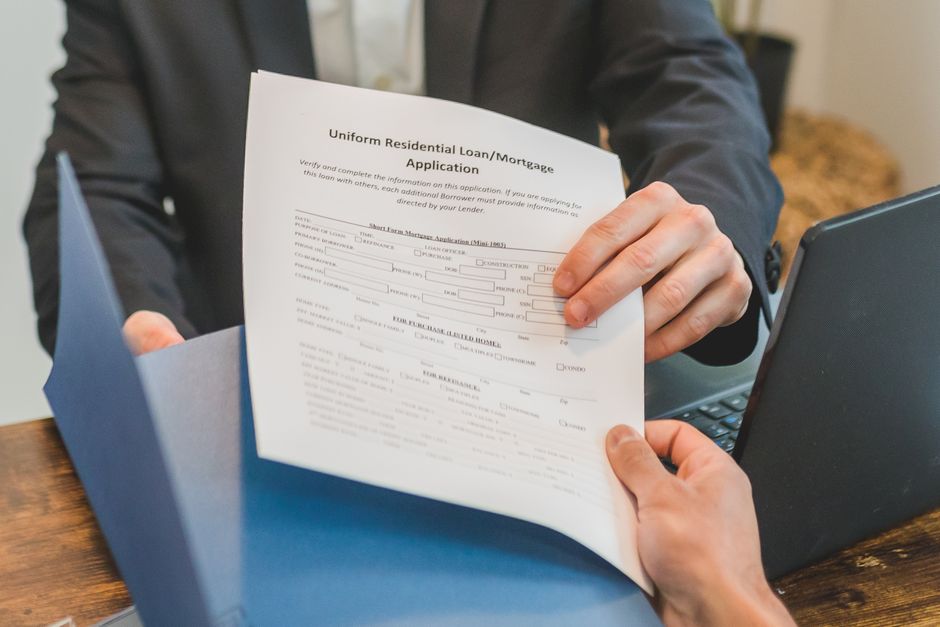
Once you lock, get the lock confirmation in writing. Same day. A verbal lock from a loan officer means nothing. You want a document that states your rate, your points, the lock expiration date, and the loan program it applies to. Check all of it. I’ve seen lock confirmations come through with the wrong program or the wrong term, and those errors cost borrowers money when the mistake wasn’t caught until underwriting.
Also: if your loan officer mentions “we’ll just lock it closer to closing,” ask exactly what that means in writing. Some lenders have an internal float policy where they “soft lock” the file and formally lock with the secondary market later. That’s the lender’s risk management, not yours, but you need to understand when your rate is actually protected.
If you’re uncertain about how to read what your lender sends you, HUD-approved housing counselors can review loan documents with you at no cost. More borrowers should use this resource. Almost none do.
Locks in a Volatile Rate Environment
When rates are swinging 0.25% to 0.5% in a single week, the case for locking early gets stronger, not weaker. Volatility cuts both ways, but purchase borrowers can’t benefit from a surprise drop the way a speculator can. You’re not positioned to take the upside. You’re just exposed to the downside.
In a relatively stable rate environment, floating short-term (a week or two while you finalize the right loan program) is lower risk. But “relatively stable” is doing a lot of work in that sentence. The rate environment of 2022 and 2023 reminded a lot of people that stability can end fast.
You can’t time mortgage rates with any consistency. Nobody can, not reliably, not retail borrowers, not most professionals. What you can do is make a smart decision once you have real information: a contract, a closing date, a confirmed loan program. Lock then. Accept that the rate you get might not be the lowest rate that existed during your purchase window. It will still be the right rate, because it’s the one you actually planned around.
Sources & References
- CFPB, Rate lock agreements, Explains rate locks, expiration, and extension costs
- Freddie Mac, Primary mortgage market survey, Authoritative source on mortgage rate trends and data
Photo: Kampus Production via Pexels
This article is for educational purposes only and does not constitute financial or mortgage advice. Mortgage rates change daily and vary by lender, loan type, credit profile, and property details. Consult a HUD-approved housing counselor (find one at hud.gov) or licensed mortgage professional for guidance specific to your financial situation.
Recommended Resources
Disclosure: As an Amazon Associate, we earn a small commission from qualifying purchases at no extra cost to you. We only recommend products that genuinely support the topics covered in this article.
- First-Time Home Buyer: The Complete Playbook (~$18), The #1 Amazon bestseller in homebuying, covers down payment strategies, mortgage pre-approval, and avoiding rookie mistakes.
- 100 Questions Every First-Time Home Buyer Should Ask (~$17), Nearly a million copies sold, covers every question to ask your lender, agent, and inspector before signing anything.