 Maria Santos
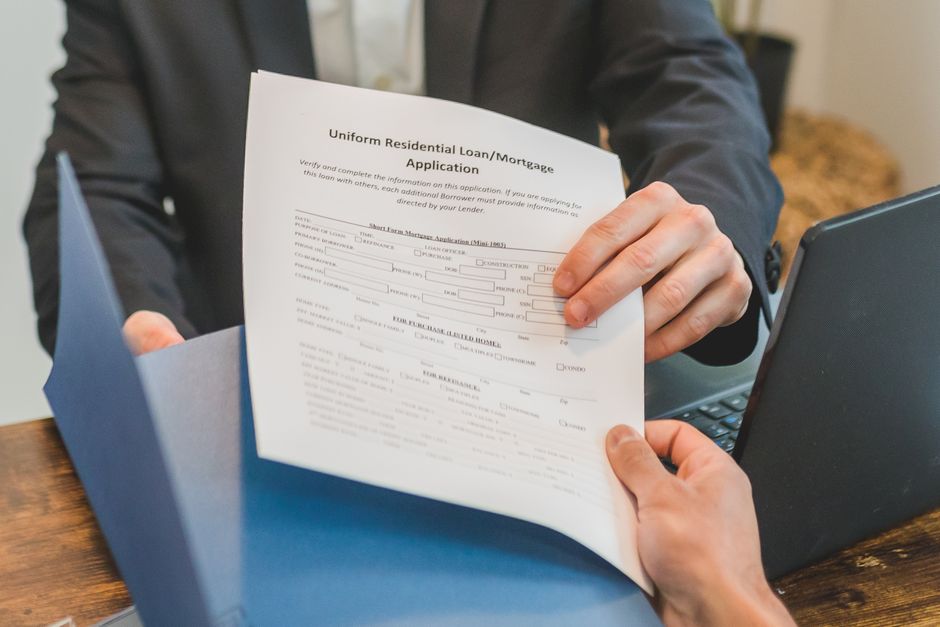
You’re sitting across from a loan officer with a three-inch stack of closing documents in front of you. Somewhere near the top of the loan estimate is a line that says “Discount Points: 1.000 ($4,200).” They mention it briefly, say it’ll lower your rate, then move on. If you don’t stop them right there and ask what that actually means for your loan, you’ve just agreed to pay thousands of dollars without understanding what you’re buying. I’ve watched it happen more times than I’d like.
Mortgage points sound simple enough. But they have real financial teeth. Get them right and you’ll save a meaningful chunk over the life of your loan. Get them wrong and you’ve handed your lender a premium you’ll never recoup.
What Mortgage Points Actually Are
There are two kinds of points, and the industry does a poor job keeping them separate in conversation.
Discount points are prepaid interest. You pay money upfront at closing to buy down your interest rate. One point equals 1% of your loan amount. On a $420,000 loan, one point costs $4,200. In exchange, your lender reduces your interest rate, typically by 0.25% per point, though that’s not fixed. It depends on the lender, the loan type, current market conditions, and sometimes even the day of the week.
Origination points are a fee the lender charges to process and originate your loan. They’re not buying you a lower rate. They’re just a cost of doing business, dressed up in the same “points” language. Always ask which type is on your loan estimate and what each one is doing for you.
The Consumer Financial Protection Bureau (CFPB) requires lenders to disclose both types clearly on your Loan Estimate under Section A of the closing costs. If you’re not sure where to look, that’s your starting point. Pull that document out and find the line item before you agree to anything.
How the Math Actually Works: The Break-Even Calculation
Helpful resource: Home Buyer’s Checklist and Moving Planner Notebook is a top-rated option for this. (As an Amazon Associate this site earns from qualifying purchases.)
This is the only number that matters when you’re deciding whether to pay points. The break-even point tells you how long you need to stay in the loan before the monthly savings from your reduced rate cover what you paid upfront.
Step 1: Get two loan quotes from your lender: one with points, one without. Make sure the only difference is the rate and the points cost. Everything else should be identical.
Step 2: Calculate your monthly payment for each scenario. A mortgage calculator will do fine.
Step 3: Subtract the lower monthly payment (points scenario) from the higher one.
Step 4: Divide the upfront cost of the points by the monthly savings. That’s your break-even month.
Example: You’re borrowing $400,000. Without points, your rate is 7.0% and your principal and interest payment is $2,661. Your lender offers to drop the rate to 6.75% for one point ($4,000) at closing. At 6.75%, your payment becomes $2,594. That’s $67 in monthly savings.
$4,000 divided by $67 equals roughly 60 months. Five years.
You need to stay in that loan for more than five years before the points pay off. Sell or refinance before that, and you’ve lost money.
If you haven’t run the numbers on how much house you can actually afford, do that first. The size of your loan changes everything about this calculation.
When Paying Points Makes Sense (and When It Doesn’t)
Paying points isn’t good or bad. It’s a bet on time. The longer you stay in the loan, the better the bet looks.
Pay points if:
- You’re buying your forever home, or at least planning to stay 7-plus years
- You have the cash to pay them without draining your reserves (walking into closing cash-poor is a serious risk)
- Rates are elevated and you want to lock in a lower effective cost
- You’re on a fixed income or tight budget and need the lowest possible monthly payment
Don’t pay points if:
- You’re buying a starter home you’ll likely outgrow in 3-4 years
- You’re in a rate environment where refinancing in 12-24 months seems likely
- Your cash reserves are thin (you want 3-6 months of housing expenses saved before taking on a mortgage)
- You’re already stretching to afford closing costs
I’ve watched buyers pay two points for a lower rate, then refinance 18 months later when rates dropped. They essentially donated money to their lender twice.
Before you layer points into an ARM, read through fixed vs. adjustable rate mortgages. The math changes significantly when your rate can move.
Comparing Points Across Different Loan Types
| Loan Type | Points Allowed | Origination Points Permitted | Tax Deductibility | Key Consideration |
|---|---|---|---|---|
| Conventional | Yes | Yes | Yes | Most flexible; fully negotiable |
| FHA | Yes | Yes | Yes | Must factor MIP costs into break-even calculation |
| VA | Yes | No | Yes (typically) | Cleaner conversation; VA lenders cannot charge origination points |
| Jumbo | Yes | Yes | Yes | Lender discretion higher; rate reduction per point varies |
Not all loan products treat points the same way. This distinction matters.
Conventional loans offer the most flexibility. You can buy points, and they’re often fully negotiable. The Federal Housing Finance Agency (FHFA) sets conforming loan limits, and any loan within those limits will have a robust market for point buydowns.
FHA loans allow points, but here’s the catch: FHA loans already carry mortgage insurance premiums that don’t go away until you’ve built enough equity or refinance. You need to factor that MIP cost into your break-even calculation, not just the rate difference. For a full breakdown of whether FHA loans make sense for you, read that first before you talk points with a loan officer.
VA loans allow discount points and they’re tax deductible in most cases. But VA lenders can’t charge origination points under VA guidelines. This makes the conversation cleaner: anything you’re paying upfront is genuinely buying you a lower rate.
Jumbo loans behave differently. Lenders have more discretion with jumbo pricing, so the rate reduction per point might be larger or smaller than on a conforming loan. Never assume a standard conversion.
| Loan Type | Points Allowed | MIP/PMI Factor | Negotiability |
|---|---|---|---|
| Conventional | Yes | PMI may apply | High |
| FHA | Yes | MIP adds complexity | Moderate |
| VA | Discount points only | No PMI | Moderate |
| Jumbo | Yes | No MIP/PMI | Variable |
The Tax Angle on Mortgage Points
Points can be tax deductible, but most borrowers don’t know the conditions.
For a home purchase, discount points paid on your primary residence are generally fully deductible in the year you paid them, provided the points are a standard charging practice in your area and weren’t paid in place of fees that would normally be itemized separately. That’s IRS language, and it matters.
For a refinance, points aren’t deductible all at once. You deduct them over the life of the loan. Pay $3,000 in points on a 30-year refinance and you’re deducting $100 a year. Not as dramatic.
Two important caveats: You have to itemize deductions to claim this benefit, and since 2017 the standard deduction rose significantly, so fewer homeowners itemize now. Also, this is a tax situation, not a mortgage one. Talk to a CPA or tax advisor about your specific circumstances before making decisions based on deductibility.
Seller-Paid Points and Temporary Buydowns
Here’s a strategy that’s gotten more attention as rates climbed: asking the seller to pay your points.
In a buyer’s market or when the seller is motivated, you can ask them to cover closing costs, including points, as a concession. They reduce their net proceeds. You get a lower rate without spending your own cash. Your break-even calculation still applies, but the cost comes from the other side of the table.
A variation is the temporary buydown, often structured as a 2-1 or 3-2-1 buydown. In a 2-1 buydown, your rate is 2% below the note rate in year one, 1% below in year two, then settles at the note rate from year three forward. The seller or builder typically pays the cost upfront and it gets placed in an escrow account that subsidizes your payments.
These aren’t permanent rate reductions. When year three hits, your payment goes up. Make sure you can afford the full payment, not just the buydown payment, before signing.
The debt-to-income ratio for mortgage breakdown will show you how your income, debts, and monthly obligations affect what you can borrow before you layer in any buydown structure.
The honest truth: loan officers have a financial incentive to sell you the loan structure that works best for their company, not always for your 30-year horizon. No one else in that closing room is running your break-even calculation. You have to do it yourself, or at minimum understand it well enough to ask the right questions. Before you sit down with a lender, review mortgage qualification requirements alongside your points decision so you know where you actually stand.
If mortgage math feels overwhelming, a home-buying guide or financial planning workbook can help organize your thinking before you talk to a lender. You’ll find several highly-rated options on Amazon (note: this site may earn a commission from purchases through external links). But for decisions with this much money at stake, nothing replaces a conversation with a qualified mortgage professional or housing counselor who can look at your full financial picture.
Sources & References
- CFPB, Buying a House, Explains loan estimates, closing costs, and mortgage points
- CFPB, What Are Discount Points, Defines discount points and how they reduce interest rates
- IRS, Mortgage Interest Deduction, Covers tax deductibility rules for mortgage points
Photo: Mikhail Nilov via Pexels
This article is for educational purposes only and does not constitute financial or mortgage advice. Mortgage rates change daily and vary by lender, loan type, credit profile, and property details. Consult a HUD-approved housing counselor (find one at hud.gov) or licensed mortgage professional for guidance specific to your financial situation.
Recommended Resources
Disclosure: As an Amazon Associate, we earn a small commission from qualifying purchases at no extra cost to you. We only recommend products that genuinely support the topics covered in this article.
- First-Time Home Buyer: The Complete Playbook (~$18), The #1 Amazon bestseller in homebuying, covers down payment strategies, mortgage pre-approval, and avoiding rookie mistakes.
- 100 Questions Every First-Time Home Buyer Should Ask (~$17), Nearly a million copies sold, covers every question to ask your lender, agent, and inspector before signing anything.