 Jennifer Walsh
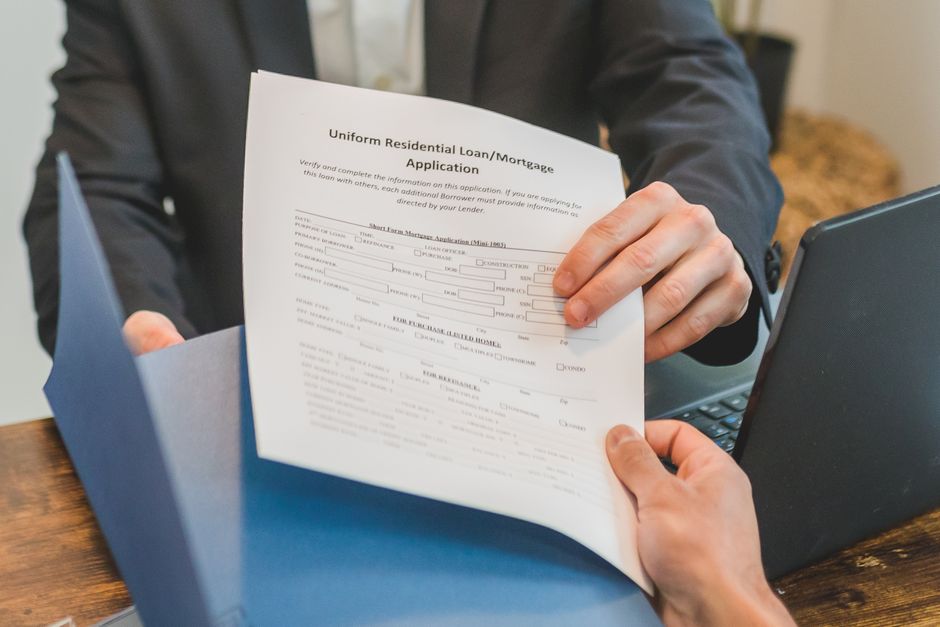
0.5%. That’s how small the origination fee sounds when a loan officer quotes it to you across a folding table at an open house. On a $400,000 mortgage, that’s $2,000 you might hand over without a second thought, tucked inside a closing disclosure you had maybe 48 hours to review. I’ve watched people do exactly that, sign, shake hands, and walk out with no idea they could have pushed back.
Let me back up.
What an Origination Fee Actually Is
The origination fee is what the lender charges to process your loan. Think of it as the administrative price tag for turning your application into an actual mortgage. It covers things like underwriting, document preparation, and the lender’s overhead for handling your file from start to finish.
Here’s where it gets a little murky: “origination fee” is sometimes one line on your Loan Estimate, and sometimes it’s an umbrella term covering several smaller charges bundled together, things like an application fee, underwriting fee, or processing fee. Lenders have some discretion in how they label these, which is why two Loan Estimates for the exact same loan amount can look wildly different on paper even when the total cost is similar. That inconsistency drove me crazy when I was underwriting. It still drives me crazy.
According to the Consumer Financial Protection Bureau (CFPB), origination charges are listed in Section A of your Loan Estimate, and this is the one section where lenders have zero tolerance for bait-and-switch: what’s quoted in Section A is what you pay at closing, no exceptions. That’s a consumer protection worth knowing about.
The industry average, per Freddie Mac’s 2024 Cost of Mortgage Survey, sits around 0.5% to 1% of the loan amount. But that’s a wide range, and the real-world spread is wider than that. I’ve seen origination fees as low as $400 on small refinances and as high as $6,000+ on jumbo loans.
How It Compares to Other Closing Costs
Helpful resource: AmazonBasics Shredder for Sensitive Financial Documents is a top-rated option for this. (As an Amazon Associate this site earns from qualifying purchases.)
Closing costs confuse almost everyone. The origination fee is just one piece of a larger puzzle, and conflating it with other fees is an easy mistake. (I made it myself the first time I reviewed a closing disclosure as a borrower rather than an underwriter. Humbling experience.)
Here’s a breakdown of the most common closing cost categories so you can see where origination sits relative to everything else:
| Cost Item | Typical Range | Who Sets It | Negotiable? |
|---|---|---|---|
| Origination fee | 0.5%–1% of loan | Your lender | Yes |
| Discount points | 0.25%–1% per point | Your lender | Yes (you choose) |
| Appraisal fee | $400–$700 | Appraiser | Rarely |
| Title insurance (owner’s) | $500–$1,500+ | Title company | Sometimes |
| Title insurance (lender’s) | $300–$900 | Title company | Sometimes |
| Attorney/settlement fee | $150–$500 | Settlement agent | Rarely |
| Recording fees | $50–$200 | Local government | No |
| Prepaid interest | Varies | Your lender | No |
| Property tax escrow | Varies | Your lender | No |
The origination fee and discount points are the two categories where you have the most leverage. Everything else is largely fixed. That distinction matters because some borrowers spend energy trying to negotiate the appraisal fee (good luck) while leaving the origination fee untouched.
The Number You Should Actually Focus On
Here’s the thing most articles don’t tell you: the origination fee doesn’t exist in isolation. A lender can charge you a lower origination fee and make it up with a higher interest rate. Or they can offer you a “no closing cost” loan, which sounds amazing until you realize your rate just went up by 0.25% and you’re going to pay far more over 30 years than you would have paid upfront.
The Federal Housing Finance Agency (FHFA) publishes data showing that the difference between the highest and lowest rates offered to the same borrower on the same day can exceed 0.5% in some markets. On a $350,000 loan, that’s roughly $38,000 in additional interest over a 30-year term. The origination fee starts to look like a rounding error by comparison.
So focus on the Annual Percentage Rate (APR), not just the interest rate. The APR folds in most lender fees, including origination, and gives you a more honest comparison when you’re shopping two different lenders. It’s not a perfect number, but it’s a much better one.
One pattern worth noting in that data: FHA loans tend to carry higher origination fees even though they’re designed for borrowers with less money. Part of that is because FHA loans require more documentation and have stricter guidelines, which means more lender work. But it’s still worth negotiating hard on FHA origination costs, because borrowers who need FHA loans often don’t realize they can.
Can You Actually Negotiate It?
Yes. Full stop.
I tell people this constantly and they look skeptical, like I’m suggesting they try to haggle at a gas station. But mortgage origination fees are explicitly negotiable, and the data backs this up: a 2022 LendingTree study found that 54% of borrowers who asked for lower closing costs received at least some reduction. More than half. Just by asking.
Here’s how it actually works in practice. You get Loan Estimates from at least three lenders (federal law requires you get this document within three business days of applying). You compare Section A on each. If Lender B’s origination fee is $1,200 and Lender A’s is $2,400 for the same loan amount, you bring that to Lender A’s loan officer and say, literally, “I have a competing offer with lower origination costs. Can you match it or explain the difference?” That’s the whole script. Most loan officers have some room to move.
What you won’t have luck negotiating: government-mandated fees, third-party service fees (the appraiser doesn’t care), and recording fees set by your county recorder’s office.
Real example from experience: a couple in Phoenix, first-time buyers, $310,000 purchase price, conventional 30-year loan. Their first lender quoted an origination fee of $2,480. After shopping two additional lenders and bringing back a competing estimate, they got the original lender down to $1,550. That’s $930 back in their pocket, for a 20-minute conversation.
Second example: a reader who emailed me in early 2026 was refinancing a $275,000 balance. She’d been quoted a $1,900 origination fee by her current servicer. She applied with two other lenders, found one at $800, and used that as leverage. Her servicer dropped to $950. Still not the lowest available, but she’d built a relationship with that servicer and valued the continuity. Reasonable trade-off.
Third scenario: a borrower taking out a VA loan, $420,000, active duty military. VA loans cap certain fees, but origination fees can still be charged up to 1% of the loan amount without itemization. His lender quoted 0.9%, or $3,780. Because VA loans prohibit certain other fees, he had more room to push back on origination. He got it down to 0.6%, saving $1,260. If you’re using a VA loan, learn what the VA prohibits lenders from charging. That knowledge alone is worth real money.
“No Origination Fee” Loans: Read the Fine Print
A growing number of lenders, particularly online lenders and credit unions, advertise “no origination fee” mortgages. As of July 2026, this framing has become more common as competition in the mortgage market has picked up. Some of these offers are genuinely good. Others are marketing.
The way “no fee” usually works: the lender absorbs the origination cost by pricing your interest rate slightly higher. You don’t pay upfront, but you pay monthly, for the life of the loan. Whether that’s a good deal depends entirely on how long you plan to keep the loan.
If you’re buying a starter home and you know you’ll sell in five to seven years, skipping the origination fee and accepting a marginally higher rate might be the right call. If you’re locking in a 30-year rate on what you expect to be your forever home, paying the origination fee upfront and getting a lower rate is almost certainly better math.
The breakeven calculation is straightforward: divide the origination fee by your monthly savings from the lower rate. If the origination fee is $2,000 and the lower rate saves you $65 a month, your breakeven is about 31 months. Stay past that, and you come out ahead by paying the fee.
If you want help running these numbers yourself, a mortgage comparison calculator or a home-buying workbook can walk you through it step by step (the site may earn a commission from that link, just so you know).
For anyone who wants a second opinion before closing, HUD-approved housing counselors at HUD.gov can review your Loan Estimate for free and flag anything that looks off. I’d recommend this especially for first-time buyers or anyone feeling rushed by their lender.
Sources
- Freddie Mac Cost of Mortgage Survey (2024): Annual data on origination fees, closing costs, and lender charges by loan type
- Consumer Financial Protection Bureau, “Your Home Loan Toolkit”: Plain-language guide to Loan Estimates, closing disclosures, and Section A fee protections
- Federal Housing Finance Agency (FHFA): Data on rate dispersion and lender pricing variation across markets
- LendingTree Closing Cost Survey (2022): Survey of 1,600+ borrowers on fee negotiation outcomes
- HUD-Approved Housing Counselor Directory: Free counseling for home buyers and refinancing borrowers
This article is for educational purposes only and does not constitute financial or mortgage advice. Mortgage rates change daily and vary by lender, loan type, credit profile, and property details. Consult a HUD-approved housing counselor (find one at hud.gov) or licensed mortgage professional for guidance specific to your financial situation.
Recommended Resources
Disclosure: As an Amazon Associate, we earn a small commission from qualifying purchases at no extra cost to you. We only recommend products that genuinely support the topics covered in this article.
- First-Time Home Buyer: The Complete Playbook (~$18), The #1 Amazon bestseller in homebuying, covers down payment strategies, mortgage pre-approval, and avoiding rookie mistakes.
- 100 Questions Every First-Time Home Buyer Should Ask (~$17), Nearly a million copies sold, covers every question to ask your lender, agent, and inspector before signing anything.