 Robert Kim
Your neighbor just mentioned she refinanced and cut her monthly payment by several hundred dollars. You’re three years into a 30-year mortgage you took out when rates were near historic highs. Now you’re wondering if you’ve been leaving money on the table.
Maybe you have. Or maybe refinancing right now would actually cost you more than you’d ever save, and you won’t figure that out until after you’ve signed the papers.
Refinancing isn’t free. It isn’t automatic. It definitely isn’t right for everyone. But when it’s the right move at the right time, it can save you tens of thousands of dollars over the life of your loan, shorten your payoff timeline, or give you access to equity you’ve been building for years. Let me walk you through exactly how it works, what it costs, and how to decide if it makes sense for your specific situation.
What Refinancing Actually Means (and What It Doesn’t)
| Refinance Type | Purpose | Effect on Loan Balance |
|---|---|---|
| Rate-and-Term | Changes interest rate, loan term, or both | No change |
| Cash-Out | Borrow more than currently owed | Increases |
| Cash-In | Bring money to pay down balance | Decreases |
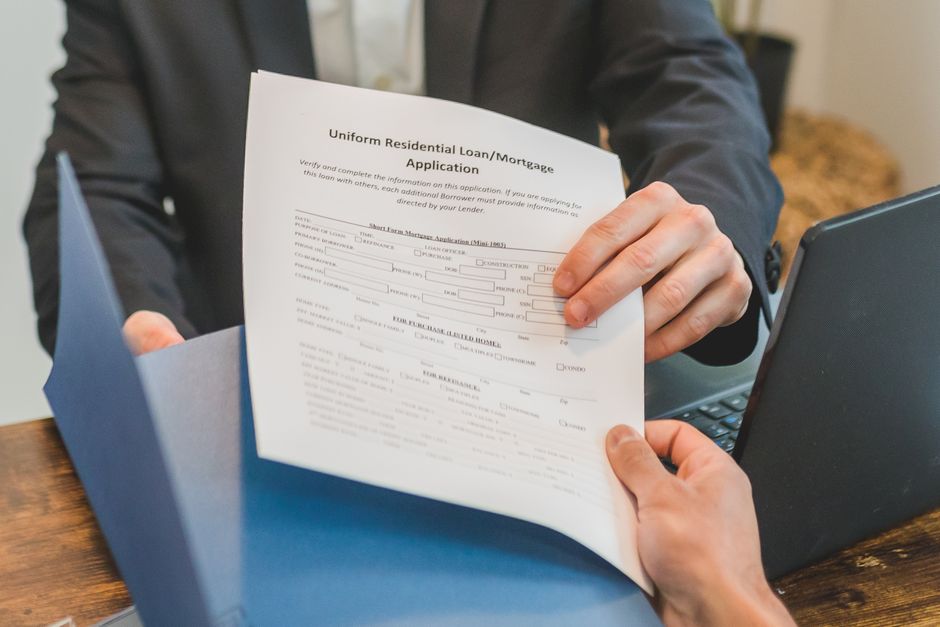
A refinance replaces your existing mortgage with a brand-new loan. That’s all it is. You’re not modifying your current loan or getting a special deal from your lender. You’re applying for a new mortgage, going through underwriting again, and paying closing costs again. The new loan pays off the old one, and you start fresh with new terms.
There are different types. A rate-and-term refinance changes your interest rate, your loan term, or both, without touching your equity. A cash-out refinance lets you borrow more than you currently owe and pocket the difference, which increases your loan balance. A cash-in refinance works the opposite way: you bring money to the table to pay down the balance and qualify for better terms.
What refinancing is not: a quick fix for cash flow problems that stem from overspending, a guaranteed way to save money, or a reset button that makes your financial past disappear. If your credit score dropped since your original loan, if your income changed, or if your home’s value fell, you may not qualify for the terms you’re expecting.
The Real Cost of Refinancing: Breaking Down Closing Costs
Here’s the part that surprises almost every borrower I’ve worked with. Refinancing costs money upfront, typically somewhere between 2% and 5% of the loan balance, paid at closing. On a $350,000 loan, you could be looking at $7,000 to $17,500 in closing costs.
Those costs include lender origination fees, a new appraisal, title search and insurance, recording fees, prepaid interest, and possibly discount points if you’re buying down your rate. Some lenders offer “no-closing-cost” refinances, but that’s marketing speak. Those costs get rolled into the loan balance or absorbed into a higher interest rate. You’re still paying them, just differently.
This is why the break-even point calculation matters so much. It’s how many months it takes for your monthly savings to recoup what you paid at closing.
Simple break-even formula:
Total closing costs ÷ monthly payment savings = number of months to break even
If you paid $8,000 in closing costs and your new payment is $200 lower per month, you’ll break even at 40 months, or about three and a half years. If you plan to sell the home or refinance again before then, you’ll lose money on the deal. Full stop.
Step-by-Step: How to Actually Refinance Your Mortgage
When Does Refinancing Your Mortgage Make Sense? · The Ramsey Show Highlights on YouTube
The process looks a lot like your original home purchase loan, but you already own the property, which simplifies things. Here’s how it goes.
Step 1: Know your current loan details
Pull out your most recent mortgage statement. You need your current interest rate, remaining balance, monthly payment, and how many years are left on the loan. You also need to know if you have a prepayment penalty, which is less common today but still exists in some loans originated before 2014.
Step 2: Check your credit score and credit report
Your credit profile determines whether you qualify and what rate you’ll be offered. Get your free credit reports at AnnualCreditReport.com and review them for errors before any lender pulls your credit. A score below 620 will severely limit your options. A score above 740 typically unlocks the best pricing.
Step 3: Calculate your home equity
Most conventional refinances require at least 20% equity to avoid private mortgage insurance (PMI). If you have less than 20%, you may still qualify, but you’ll likely pay PMI on the new loan, which eats into your savings. Knowing your estimated home value (a real estate agent can give you a rough comp, or check recent sales in your area) and your current balance tells you your loan-to-value ratio, which is one of the first things any underwriter looks at.
Step 4: Shop at least three to five lenders
This is where most borrowers leave money on the table. The Consumer Financial Protection Bureau consistently advises borrowers to get multiple loan estimates before committing to any lender. Even a quarter of a percentage point difference in rate can mean thousands of dollars over the life of the loan. Compare credit unions, community banks, mortgage brokers, and online lenders. Don’t rely solely on your current servicer out of convenience.
Step 5: Lock your rate
Once you’ve chosen a lender and received a Loan Estimate (a standardized three-page disclosure required by federal law), ask about rate lock options. Rates move daily. A 30-day lock is standard, but if your close will take longer, you may need a 45 or 60-day lock, which typically costs slightly more.
Step 6: Go through underwriting
Submit your documents: two years of tax returns and W-2s, recent pay stubs, two to three months of bank statements, and your homeowner’s insurance information. Your lender will order an appraisal. Don’t make large purchases or open new credit accounts during this period. Anything that changes your debt-to-income ratio can derail approval.
Step 7: Review the Closing Disclosure
You’ll receive a Closing Disclosure at least three business days before closing. Compare it line by line against your Loan Estimate. Fees shouldn’t increase beyond the tolerances allowed by law, but errors happen. Question anything that doesn’t match.
Step 8: Close and wait for the right of rescission
At closing, you’ll sign a stack of documents. For a refinance on your primary residence, federal law gives you three business days to cancel the loan after signing without penalty. This is called the right of rescission. Use those three days to review everything with a clear head.
Rate-and-Term vs. Cash-Out: Choosing the Right Type
| Feature | Rate-and-Term Refinance | Cash-Out Refinance |
|---|---|---|
| Primary goal | Lower rate or shorter term | Access home equity |
| Effect on loan balance | Same or lower | Higher |
| Typical equity requirement | 5-20% depending on loan type | Usually 20% minimum remaining |
| PMI risk | Depends on LTV | Depends on new LTV |
| Interest rate | Usually lower | Usually slightly higher |
| Tax implications | Minimal | Interest deductibility may be limited |
| Best for | Savers, long-term owners | Home improvement, debt consolidation |
A cash-out refinance is powerful, but it turns equity into debt. I’ve seen clients use it brilliantly to fund a renovation that added more value to the home than the loan increase. I’ve also seen clients cash out to pay off credit cards, then run the cards back up within two years, leaving them worse off with a larger mortgage balance and the same consumer debt. The tool is neutral. The discipline behind it is what matters.
When Refinancing Makes Sense (and When It Doesn’t)
The classic rule of thumb says refinancing is worth it if you can lower your rate by 1% or more. That’s a reasonable starting point, but it’s too simple. What actually matters is the size of your remaining balance, how long you’ll stay in the home, and the total cost of the transaction.
Refinancing makes a strong case for itself when:
- Rates have dropped significantly since your original loan and you plan to stay in the home long enough to break even
- You want to switch from an adjustable-rate mortgage to a fixed-rate loan before your adjustment period hits
- You’ve built enough equity to eliminate PMI payments through a refinance
- You want to shorten your loan term from 30 years to 15 years and can handle the higher payment
Refinancing is probably not your best move when:
- You’re 20 or more years into a 30-year mortgage. Refinancing into a new 30-year loan restarts the amortization clock, meaning you’ll pay significantly more interest in the front-loaded early years again
- Your closing costs won’t be recouped before you sell or move
- Your credit or income situation has deteriorated since your original loan
- You’re trying to use equity to fund lifestyle spending rather than investments or value-adding expenses
Freddie Mac’s homebuyer resources offer helpful tools for understanding how loan term and rate changes affect your total interest paid over time, which is often more illuminating than just looking at the monthly payment change.
Common Mistakes That Cost Borrowers Money
Focusing only on the rate. The rate matters, but so does the loan term, the fees, and how they interact. A lower rate on a new 30-year loan can mean paying more total interest than staying with your current loan if you’re already several years in.
Not locking the rate soon enough. I’ve watched clients try to time the market, waiting for rates to dip just a bit more. Rates moved against them and the deal they had fell apart.
Ignoring the APR. The Annual Percentage Rate reflects the true cost of the loan including fees, not just the interest rate. When comparing offers, the APR is more meaningful than the rate alone.
Using the wrong loan type for the goal. If you need $40,000 for a kitchen renovation, a cash-out refinance might make sense. A home equity line of credit might also work and could preserve your existing low rate on your first mortgage. Always compare your alternatives.
Skipping the Closing Disclosure review. Errors in closing documents aren’t rare. A misapplied fee, wrong loan amount, or incorrect rate can show up. You have the right to question it and correct it before you sign.
Take your time with this decision. Run the numbers more than once, shop more than one lender, and read what you sign. The Consumer Financial Protection Bureau’s “Owning a Home” resource center has a plain-language breakdown of every disclosure document you’ll encounter. If you want to go deeper on the math before you ever talk to a lender, Mortgage Management For Dummies can help you build a solid foundation. A good refinance doesn’t require you to trust the loan officer. It requires you to understand what you’re agreeing to. That starts before you ever pick up the phone.
Sources & References
- CFPB, What is refinancing?, Explains refinance types and how the process works
- HUD, Refinancing your mortgage, Government guidance on refinancing considerations and costs
- CFPB, Closing costs, Details typical closing costs for mortgage transactions
Photo: Ivan S via Pexels
This article is for educational purposes only and does not constitute financial or mortgage advice. Mortgage rates change daily and vary by lender, loan type, credit profile, and property details. Consult a HUD-approved housing counselor (find one at hud.gov) or licensed mortgage professional for guidance specific to your financial situation.
Recommended Resources
Disclosure: As an Amazon Associate, we earn a small commission from qualifying purchases at no extra cost to you. We only recommend products that genuinely support the topics covered in this article.
- First-Time Home Buyer: The Complete Playbook (~$18), The #1 Amazon bestseller in homebuying, covers down payment strategies, mortgage pre-approval, and avoiding rookie mistakes.
- 100 Questions Every First-Time Home Buyer Should Ask (~$17), Nearly a million copies sold, covers every question to ask your lender, agent, and inspector before signing anything.