 Jennifer Walsh
The tax return is the enemy of the self-employed borrower. I say that after sixteen years of watching otherwise strong candidates get rejected, delayed, or strong-armed into bad loan terms because their Schedule C made them look broke on paper even when they had $15,000 a month hitting their business checking account.
Here’s the thing nobody explains clearly upfront: lenders don’t care what you earn. They care what you report. And for most self-employed borrowers, those two numbers are very, very different.
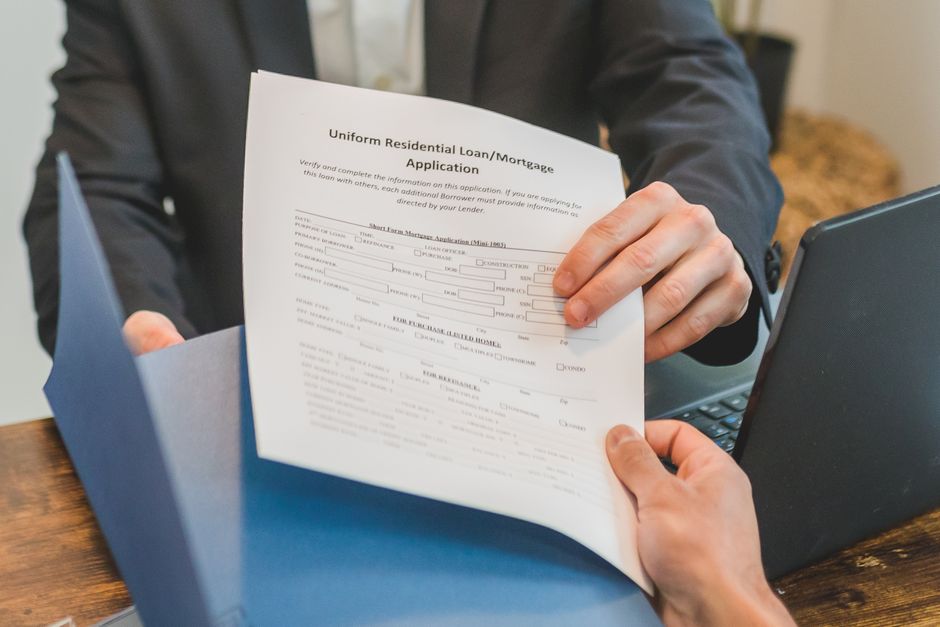
If you write off every legitimate business expense (as you should), your taxable income drops. That’s smart tax strategy. It’s also the thing that tanks your mortgage application. Underwriters are going to take your net income after deductions, not your gross revenue. So the freelancer bringing in $120,000 a year who writes off $60,000 in expenses looks, on a 1003 application, like someone making $60,000. Which may or may not qualify them for the loan they need.
I’m not telling you this to discourage you. I’m telling you because if you understand the problem, you can actually plan around it.
What Lenders Actually Look At
When you’re a W-2 employee, income verification is straightforward. Two pay stubs and a W-2. Done. Self-employed borrowers need a completely different documentation package, and most loan officers don’t bother to explain why.
Standard conventional loans (Fannie Mae and Freddie Mac guidelines) want two years of personal tax returns, two years of business tax returns if your business is a partnership, S-corp, or corporation, a year-to-date profit and loss statement, and two to three months of business bank statements. Some lenders will also want a CPA letter confirming you’ve been in business for at least two years and that the business is still operating.
The two-year requirement is firm on conventional loans. Not negotiable. I’ve had borrowers try to argue it with me. Lenders need to see that your self-employment income is stable and likely to continue, and two years of tax history is how they satisfy that requirement. If you’ve been self-employed for 18 months, you’re either waiting or you’re looking at a different loan product.
What the underwriter is calculating is your qualifying income. For a sole proprietor, that’s your Schedule C net profit plus any depreciation or depletion you wrote back in. For an S-corp owner, it gets trickier: they’ll look at your W-2 wages from the business plus your share of business income or loss from the K-1, then add back depreciation and certain non-cash expenses. The math varies slightly by lender, but the takeaway is that a lot of legitimate write-offs get added back, which can work in your favor.
This is one of the few areas where having a good mortgage broker actually pays off. They can run your income calculation across multiple lenders’ guidelines before you ever submit an application. A broker who specializes in self-employed borrowers will know which underwriting approach favors your specific situation.
The Bank Statement Loan: When Conventional Doesn’t Work
| Loan Type | Interest Rate Premium | Down Payment | Reserve Requirements | Best For |
|---|---|---|---|---|
| Conventional | Baseline | 5-20% | 2-6 months housing payment | Self-employed 2+ years, strong tax returns |
| Bank Statement (Non-QM) | +0.75 to +1.5% | 10-20%+ | Varies by lender | Aggressive write-offs, consistent deposits |
| Jumbo | Varies | 10-20%+ | 12 months+ housing payment | High loan amounts, self-employed |
| Jumbo + Self-Employed | Varies | 10-20%+ | 12 months housing payment | High loan amounts with income documentation challenges |
Helpful resource: First-Time Home Buyer: The Complete Playbook is a top-rated option for this. (As an Amazon Associate this site earns from qualifying purchases.)
There’s a whole category of loan products built specifically for borrowers who can’t qualify the traditional way. Bank statement loans, sometimes called Non-QM (non-qualified mortgage) loans, let you use 12 or 24 months of business or personal bank statement deposits as your income documentation instead of tax returns.
The appeal is obvious. If your deposits show $15,000 a month consistently, the lender uses a percentage of that (typically 50% for business accounts, sometimes 75-90% for personal) as your qualifying income. You’re not penalized for aggressive tax write-offs.
Now for the honest part. These loans cost more. Meaningfully more. You’re typically looking at interest rates 0.75 to 1.5 percentage points higher than a comparable conventional loan. Down payment requirements are usually 10-20%, sometimes higher depending on your credit score. And not every lender offers them, so your options are narrower.
They’re not a scam. They fill a real need. But don’t let a loan officer steer you into one before you’ve actually confirmed you can’t qualify conventionally. I’ve seen borrowers pay a rate premium they didn’t have to pay because nobody bothered to run the tax return numbers properly first.
The Credit and Reserves Picture
Self-employed borrowers face a higher bar than W-2 borrowers in one specific area: reserves. After your down payment and closing costs, lenders want to see cash left over. For a conventional self-employed borrower, that’s often 2-6 months of housing payments sitting in an accessible account. For a jumbo loan, 12 months isn’t unusual.
This makes sense from the lender’s perspective. Your income fluctuates. A bad quarter happens. They want proof you can absorb it.
Your credit score matters as much as it does for any borrower. A score above 740 gets you the best pricing. Below 680, your options narrow and you’re paying for it in rate. If you’re self-employed with a thin credit file (common if you’ve charged business expenses on business cards rather than personal ones), that’s something to fix 12 months before you plan to buy.
Debt-to-income ratio is the other critical factor. Your monthly debt obligations divided by your qualifying monthly income has to stay below 45% on most conventional loans, 43% on many. Car payments, student loans, credit card minimums, and your proposed new mortgage payment all count. This is where self-employed borrowers get surprised: they thought the income side was the only problem, then discovered a student loan or a business credit card (if it’s in their personal name) was pushing their DTI over the limit.
Preparation: What to Do 12-24 Months Before You Apply
This section is the one most articles skip. It’s also arguably the most useful.
If you know you want to buy a home in the next one to two years, your tax strategy needs to account for that. I’m not telling you to artificially inflate your income or commit tax fraud. I’m telling you to have a conversation with your CPA about the tradeoff between minimizing taxes now and maximizing qualifying income for a mortgage. Sometimes that means writing off a bit less in year two. Sometimes it means timing a large equipment purchase after you’ve closed. The math on carrying a slightly larger tax bill in one year versus paying a higher mortgage rate for 30 years usually favors the latter.
Get your two years of tax returns filed on time. Ideally not on extension. Lenders can work with filed extensions, but it adds friction and some programs won’t touch them.
Open and season your bank accounts. “Seasoning” means the money’s been sitting there long enough that the lender won’t ask where it came from. Large deposits right before a mortgage application raise red flags. If a family member is gifting you part of your down payment, there’s a formal process: a signed gift letter, sometimes proof that the donor had the funds to give.
Keep your business and personal finances strictly separate. Commingled accounts are an underwriting nightmare and sometimes a deal-killer.
Freddie Mac has solid free guidance for self-employed borrowers in their home buyer resources at myhome.freddiemac.com. It explains how the qualifying income calculations actually work from the agency’s own perspective.
Working the System: Practical Tips That Actually Help
Get a prequalification letter from a lender who has actually reviewed your tax returns, not just your stated income. “Pre-approval” means different things to different lenders. An underwriter-reviewed pre-approval (sometimes called a TBD approval, meaning the property address is to be determined) is worth far more when making an offer in a competitive market.
If your qualifying income is borderline, consider buying with a larger down payment. Getting below an 80% loan-to-value ratio removes private mortgage insurance and can unlock better rate tiers. It doesn’t fix a DTI problem by itself, but it can shift the math enough to matter.
Consider working with a HUD-approved housing counselor before you start the process. I know that sounds like a recommendation for someone who can’t figure things out on their own, but these counselors see self-employed borrowers constantly and they’re free. A session with one can catch problems before they become rejections.
For deeper prep work, a resource like The Self-Employed Borrower’s Workbook or a solid home-buying preparation checklist can help you build your documentation portfolio before you ever sit down with a lender. (The site may earn a commission on purchases made through these links.)
Sources & References
- Fannie Mae, Self-Employment Income Guidelines, Details official self-employed income documentation requirements
- CFPB, What is a debt-to-income ratio?, Explains how lenders calculate qualifying income
- IRS, Self-Employment Tax Overview, Covers Schedule C and self-employment reporting
Photo: Arina Krasnikova via Pexels
This article is for educational purposes only and does not constitute financial or mortgage advice. Mortgage rates change daily and vary by lender, loan type, credit profile, and property details. Consult a HUD-approved housing counselor (find one at hud.gov) or licensed mortgage professional for guidance specific to your financial situation.
Recommended Resources
Disclosure: As an Amazon Associate, we earn a small commission from qualifying purchases at no extra cost to you. We only recommend products that genuinely support the topics covered in this article.
- First-Time Home Buyer: The Complete Playbook (~$18), The #1 Amazon bestseller in homebuying, covers down payment strategies, mortgage pre-approval, and avoiding rookie mistakes.
- 100 Questions Every First-Time Home Buyer Should Ask (~$17), Nearly a million copies sold, covers every question to ask your lender, agent, and inspector before signing anything.