 Maria Santos
If you’ve been house hunting this summer, you already know something feels off. Rates were supposed to come down. Everyone said 2026 was going to be the year buyers finally caught a break. And for a brief, beautiful moment in late February, it looked like that was actually happening. The 30-year fixed mortgage had dipped below 6% for the first time in four years. Then the U.S.-Iran conflict started, and the whole picture changed fast.
As of the week ending August 6, 2026, the 30-year fixed rate averaged 6.69%, according to Freddie Mac’s Primary Mortgage Market Survey. That’s the highest it’s been since July 2025, and it’s the fifth consecutive week rates have risen. If you were pre-approved back in January or February, your buying power has shrunk. That’s not a technicality. That’s real money gone from your budget every single month.
You might be wondering what a war in the Middle East has to do with your mortgage payment in Ohio or Arizona. It’s a fair question, and the answer is less complicated than it sounds.
- The 30-year fixed mortgage averaged 6.69% as of Aug. 6, 2026, the highest in over a year.
- Rates briefly fell below 6% in late February 2026 before the Iran conflict reversed the trend.
- The Mortgage Bankers Association forecasts rates around 6.5% through the rest of 2026.
- Pending home sales fell 1.7% in the latest week, hitting their lowest point since early April.
- Sellers are cutting prices, and the median monthly payment dropped to $2,575 in late July.
Why a War Pushes Your Mortgage Rate Up
Mortgage rates don’t move because a bank woke up in a bad mood. They mostly follow the yield on 10-year U.S. Treasury bonds, which investors treat as a safe baseline. When there’s global uncertainty, like a military conflict involving a major oil-producing region, a few things happen at once.
Oil prices spike. Inflation fears climb. Investors get nervous and demand higher returns to lend money. The Federal Reserve, already watching inflation carefully, becomes even more reluctant to cut interest rates. All of that pressure rolls downhill and lands squarely on mortgage rates.
In late February, when the conflict erupted, rates surged as high as 6.94% in the weeks that followed. That’s nearly a full percentage point swing from where buyers thought they were heading. On a $400,000 loan, the difference between 5.9% and 6.94% is roughly $245 more per month. Over 30 years, that’s about $88,000.
What the Forecasts Actually Say (And What They’re Not Saying)
Helpful resource: Home Buyer’s Checklist and Moving Planner Notebook is a top-rated option for this. (As an Amazon Associate this site earns from qualifying purchases.)
Here’s what I tell people when they ask whether to wait for rates to drop: the honest forecasts are modest. The Mortgage Bankers Association projects the 30-year rate will average around 6.5% for the rest of 2026. Fannie Mae is slightly more optimistic, forecasting a dip to 6.4%. Neither organization expects a return to sub-6% territory anytime soon.
| Forecaster | 30-Year Rate Forecast (Rest of 2026) | Sub-6% Expected? |
|---|---|---|
| Mortgage Bankers Association | ~6.5% average | No |
| Fannie Mae | ~6.4% | No |
| Current rate (Aug. 6, 2026) | 6.69% | , |
That’s not a crash. It’s a slow drift downward, if conditions cooperate. And conditions right now aren’t cooperating. The Iran conflict has added a layer of inflation pressure that the Fed wasn’t counting on, and until that resolves, don’t expect dramatic rate relief.
What the forecasts also can’t tell you is timing. Geopolitical conflicts don’t follow a schedule. Rates could ease if tensions de-escalate. They could climb further if the conflict widens. Anyone who tells you they know exactly what rates will do next month is guessing.
The Human Cost: What Elevated Rates Are Doing to the Market
Interest Rate Buy Downs - How It Works And Why You Should Get It (First Time Home Buyers) · Javier Vidana on YouTube
One industry estimate reported by Redfin projects that the war’s impact on mortgage rates will cost the housing market at least 400,000 home sales nationally in 2026, with total existing-home sales now forecast near 4 million. To put that in perspective, a healthy market typically sees 5 to 5.5 million existing-home sales per year. We’re well short of that.
Pending home sales fell to their lowest level since early April during the four weeks ending July 26, declining 1.7% in the latest week alone. That’s not just a statistic. Those are real buyers who backed out, or who couldn’t qualify at today’s rates, or who just got exhausted and gave up.
Real estate brokers are feeling it. HousingWire spoke with agents across the country who described watching deals fall apart in spring and early summer as rates climbed, saying the early 2026 recovery they’d counted on essentially evaporated after February.
The Silver Lining That Most Buyers Are Missing
Here’s the part that doesn’t get enough attention. While rates are higher than anyone wanted, sellers are responding. The median U.S. housing payment actually declined to $2,575 in late July, its lowest point in three months, because sellers have been cutting asking prices to their lowest level in a year. Fewer buyers in the pool means less competition, and less competition means more negotiating room.
If you’ve been waiting for some perfect combination of low rates and affordable prices, that combination is rare and possibly mythical. What you have right now is a market where sellers are motivated, bidding wars have cooled, and you’re far less likely to waive inspections or pay $50,000 over asking just to get a house.
There’s also the refinance path. If you buy at 6.69% today and rates do drift toward 6.4% or lower over the next year or two, refinancing becomes an option. It’s not free (closing costs typically run 2-3% of the loan amount), but it’s a real tool. I’ve seen plenty of people buy in what felt like the “wrong” rate environment and refinance 18 months later into something much more comfortable.
What to Do Right Now
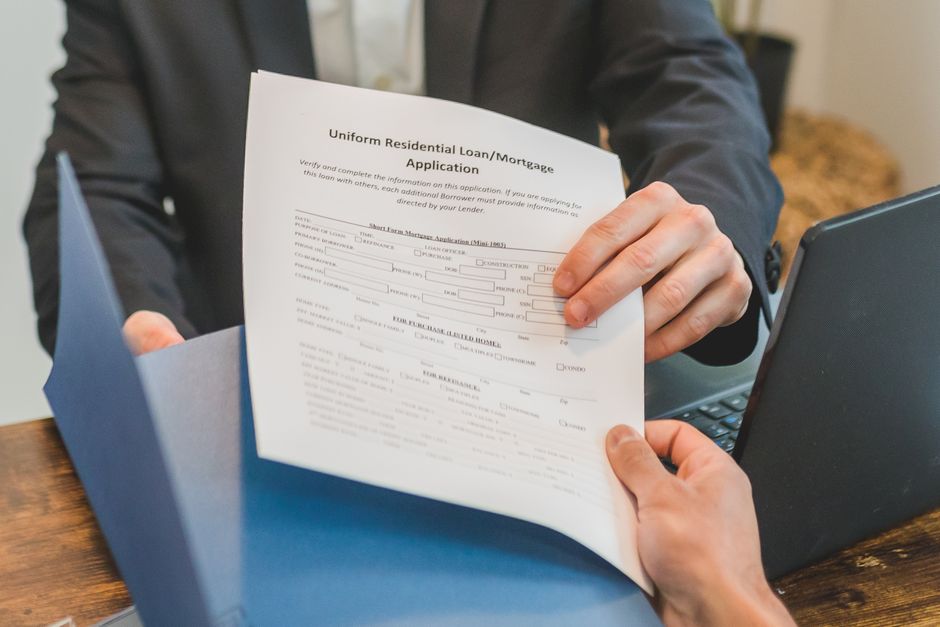
If you’re actively searching, get your pre-approval refreshed. A pre-approval from January may no longer reflect what you can actually borrow at today’s rates. Know your real number before you fall in love with a house.
If you’re on the fence about waiting, think carefully about what you’re waiting for. Six months from now, rates might be 6.4%. They might be 6.8%. Sellers might get their confidence back and start raising prices again as inventory tightens. Sitting out isn’t a guaranteed win.
Talk to a HUD-approved housing counselor or an independent mortgage broker (not just one lender) before making any decisions. This is a big enough financial commitment that getting a second opinion costs you nothing and could save you thousands.
The Iran conflict created a mess for the 2026 housing market that nobody predicted in January, and there’s no clean resolution on the horizon. But buyers who do their homework right now, understand what they’re actually looking at, and stay clear-eyed about the tradeoffs are still making good decisions every week.
Sources
- U.S. Mortgage Rates Rise for Fifth Week as Iran War Adds to Inflation Pressure (August 10, 2026)
- Mortgage Rates Hit Year Highs as Iran War Fuels Economic Uncertainty (Redfin July 2026 Report) (Late July / Early August 2026)
- Real Estate Brokers Say Rising Mortgage Rates Derail Early 2026 Housing Rebound (Late July 2026)
- The Iran War’s Impact on the U.S. Housing Market, Explained (May 5, 2026)
- Mortgage Rate Trends and Predictions for August 6–12, 2026 (August 6, 2026)
- Mortgage Rate Predictions for August 2026 (August 2026)
Photo: Jakub Zerdzicki via Pexels
This article is for educational purposes only and does not constitute financial or mortgage advice. Mortgage rates change daily and vary by lender, loan type, credit profile, and property details. Consult a HUD-approved housing counselor (find one at hud.gov) or licensed mortgage professional for guidance specific to your financial situation.
Recommended Resources
Disclosure: As an Amazon Associate, we earn a small commission from qualifying purchases at no extra cost to you. We only recommend products that genuinely support the topics covered in this article.
- First-Time Home Buyer: The Complete Playbook (~$18), The #1 Amazon bestseller in homebuying, covers down payment strategies, mortgage pre-approval, and avoiding rookie mistakes.
- 100 Questions Every First-Time Home Buyer Should Ask (~$17), Nearly a million copies sold, covers every question to ask your lender, agent, and inspector before signing anything.