 Ethan Chen
Most people assume underwriting is a two-or-three-day rubber stamp at the end of their loan process. The real number that stopped me cold when I first started in this industry: according to ICE Mortgage Technology’s Origination Insight Report, the average time to close a purchase loan in the U.S. currently runs around 43 days total, and underwriting alone accounts for roughly a third of that window. Sometimes more. Sometimes a lot more.
I’ll be honest, I spent years on the other side of the desk, reviewing files and sending out conditions. I watched borrowers lose sleep over what felt like radio silence. And almost every single one of them had been told “it should only take a few days.” That gap between expectation and reality is where a lot of deals fall apart, and it’s why I want to lay this out as plainly as I can.
- Underwriting alone typically takes 3–10 business days, but can stretch to 3+ weeks.
- "Suspended" or "conditional" approvals (not outright denials) are the most common delay trigger.
- Purchase loans take longer on average than refinances due to added complexity.
- A complete, organized application package at submission cuts underwriting time significantly.
- Conventional loans currently process faster than FHA/VA loans on average.
What underwriting actually is (and why it’s slower than it sounds)
Underwriting is the part where a human being (or an automated system that a human then reviews) decides whether you’re a risk worth taking. They’re checking your income, your assets, your credit, the property’s appraisal, the title work, and whether the whole package meets whatever loan program guidelines apply. It’s not a vibe check. There are checklists, guidelines from entities like the Federal Housing Finance Agency (FHFA), and investor overlays on top of those.
The part most borrowers don’t realize: underwriting isn’t a single decision. It’s often a back-and-forth. You get a conditional approval (which means “yes, but we need these 14 things first”), you gather the documents, your loan officer resubmits, the underwriter reviews again, issues maybe four more conditions, rinse, repeat. What surprised me was how often a loan that technically could close in a week ends up taking three because of one small document that nobody flagged upfront.
The timeline, by loan type
Helpful resource: The Millionaire Real Estate Investor by Gary Keller is a top-rated option for this. (As an Amazon Associate this site earns from qualifying purchases.)
As of July 2026, here’s a realistic breakdown of how long underwriting takes across different loan scenarios, based on industry data and my own experience watching hundreds of files move through the pipeline:
| Loan Type | Typical Underwriting Time | Why It Takes That Long |
|---|---|---|
| Conventional Purchase | 5–10 business days | Fannie/Freddie guidelines, appraisal review |
| FHA Purchase | 8–14 business days | HUD overlays, FHA case number setup, stricter property standards |
| VA Purchase | 10–16 business days | COE verification, VA appraisal (called a “Notice of Value”), specific eligibility checks |
| Conventional Refi | 4–8 business days | No purchase contract needed, often fewer moving parts |
| FHA Streamline Refi | 5–10 business days | Reduced documentation, but still requires FHA-specific review |
| Jumbo Purchase | 12–21 business days | Non-agency guidelines, higher scrutiny, manual underwriting |
| USDA Rural Development | 14–21+ business days | Two-stage approval: lender UW plus USDA agency approval |
That USDA number is not a typo. There’s a second approval layer from the agency itself that most people don’t know about until they’re already in contract.
The real reasons files get stuck
When I was underwriting, the single biggest delay I caused (and I’m owning this) was what we called a “stacked condition.” I’d issue a conditional approval, the borrower would respond to my conditions, and then I’d review and issue four more conditions based on what the new documents showed. Not because I was being difficult. Because each document answered one question and raised two more.
Here’s what actually delays underwriting, ranked roughly by how often I saw them:
1. Gaps in income documentation. Self-employed borrowers especially. If you’re a freelancer or own a business, you’re going to need two years of tax returns, a year-to-date P&L, sometimes 12 months of business bank statements, and potentially a CPA letter. Missing any piece means a new round of conditions.
2. Large, unexplained deposits. A $4,200 deposit that hits your bank account two months before you apply needs a paper trail. Gift? Side job? Mattress money? Every dollar in your down payment has to be sourced. The underwriter’s job is to rule out borrowed funds that would distort your debt-to-income ratio.
3. Appraisal issues. The appraiser comes back low, or flags repairs, or the property has a weird feature (a barn, an in-law unit with a kitchen that might be a “second unit”) and now the underwriter needs clarification. This adds days and sometimes kills the loan entirely.
4. Title problems. Old liens, a divorce that wasn’t recorded properly, a judgment from a prior owner. I’ve seen files delayed three weeks over a $340 mechanic’s lien from 2014 that a previous owner never paid off.
5. Lender capacity. This one nobody talks about. When rates drop and applications surge, underwriting queues back up. A file that would take five days in a slow market can sit for two weeks in a refi boom. The lender’s website won’t tell you this. You have to ask your loan officer: “What’s your current underwriting turn time?” That question alone will tell you a lot.
A worked example (this is where it gets real)
Scenario 1: Sara, a W-2 employee buying a conventional home with 20% down, submits a clean file: two years of W-2s, one month of paystubs, two months of bank statements, no large unexplained deposits, stable employment. Action: Loan officer submits to underwriting with a complete package. Result: Conditional approval in 4 business days, 2 minor conditions (homeowner’s insurance binder, updated bank statement), cleared in 2 more days. Total underwriting time: 6 business days.
Scenario 2: Marcus, self-employed for three years, applying for an FHA loan. His tax returns show significant write-offs that reduce his qualifying income to right at the minimum threshold. Action: Submitted without a CPA letter or year-to-date P&L. Underwriter issues conditions requesting both, plus 12 months of business bank statements to verify income consistency. Result: Marcus takes 9 days to gather documents. Underwriter reviews, then requests a letter explaining a $6,800 deposit in month 8. Total underwriting time: 23 business days, plus a stress level that aged him visibly.
Scenario 3: VA purchase loan, first-time buyer, Certificate of Eligibility (COE) hadn’t been pulled before submission. Appraiser flags a peeling paint issue on the exterior (VA requires this be remediated before closing). Action: Seller agrees to repair. Appraiser has to re-inspect. VA appraisals have their own scheduling queue. Result: 18 business days in underwriting, and the closing date had to be pushed back 12 days. The buyer almost lost the rate lock and had to pay to extend it.
What you can actually do to speed this up
I get this question constantly. Here’s the honest version: you can’t control how fast the underwriter works, but you can control how clean your file is when it gets there.
Respond to document requests the same day. Every 24-hour delay on your end is potentially a day added to the cycle. Keep your bank accounts boring during the process (no large transfers, no sudden deposits). Don’t open new credit cards or finance a car. Don’t change jobs. These sound obvious, but I’ve watched borrowers do all of these things mid-underwriting.
Also: if you’re self-employed or have anything complicated about your finances, talk to a HUD-approved housing counselor before you even apply. They can help you see your own file the way an underwriter will see it, which is a genuinely different perspective.
One more thing that took me a while to learn from the borrower side: ask your loan officer specifically “Has the underwriter reviewed my file yet, or is it still in queue?” There’s a difference between “in underwriting” (sitting in a stack) and “with the underwriter” (actively being reviewed). Loan officers sometimes conflate these, and knowing which phase you’re in changes how you should think about timing.
If you want to dig deeper into how lenders evaluate risk and what you can do to strengthen your application before you get into this process, a resource like The Mortgage Encyclopedia (note: that link may earn the site a small commission) can help you get oriented before you’re already in the middle of it.
Sources
- ICE Mortgage Technology Origination Insight Report: Monthly industry data on loan closing times and origination metrics, used for average timelines cited throughout.
- Federal Housing Finance Agency (FHFA): Regulatory body overseeing Fannie Mae and Freddie Mac guidelines that govern conventional loan underwriting standards.
- U.S. Department of Housing and Urban Development (HUD): FHA loan guidelines, property standards, and housing counselor resources.
- U.S. Department of Veterans Affairs: VA Home Loans: VA loan eligibility requirements, appraisal (Notice of Value) process, and COE documentation.
- Consumer Financial Protection Bureau (CFPB) Mortgage Data: Data on loan performance and borrower outcomes by loan type.
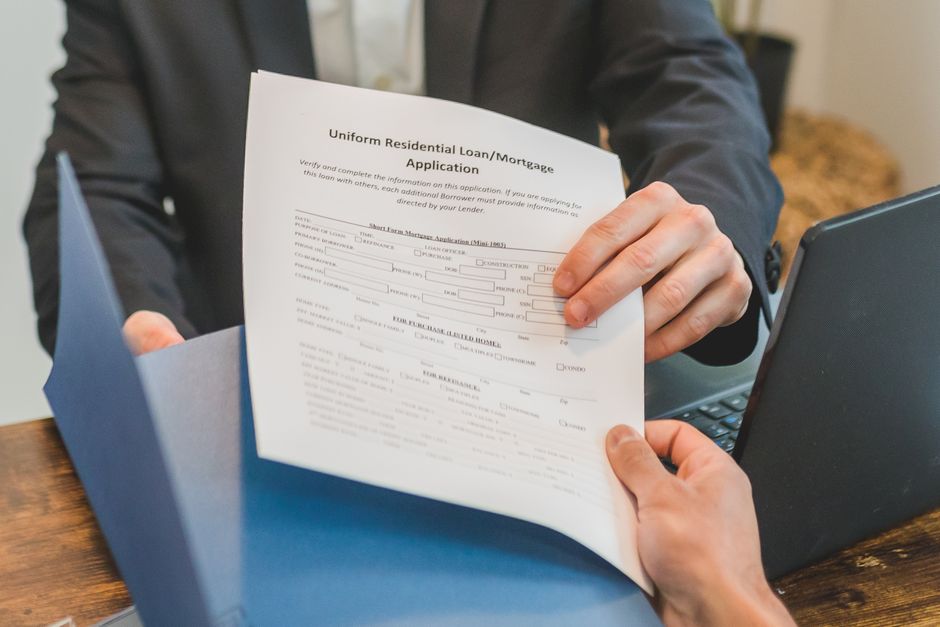
Photo: Mikhail Nilov via Pexels
This article is for educational purposes only and does not constitute financial or mortgage advice. Mortgage rates change daily and vary by lender, loan type, credit profile, and property details. Consult a HUD-approved housing counselor (find one at hud.gov) or licensed mortgage professional for guidance specific to your financial situation.
Recommended Resources
Disclosure: As an Amazon Associate, we earn a small commission from qualifying purchases at no extra cost to you. We only recommend products that genuinely support the topics covered in this article.
- First-Time Home Buyer: The Complete Playbook (~$18), The #1 Amazon bestseller in homebuying, covers down payment strategies, mortgage pre-approval, and avoiding rookie mistakes.
- 100 Questions Every First-Time Home Buyer Should Ask (~$17), Nearly a million copies sold, covers every question to ask your lender, agent, and inspector before signing anything.