 Susan Taylor
You’re probably staring at your loan estimate right now, squinting at a line that says “Discount Points: 1.000 ($3,200)” and wondering if you just got offered a gift or walked into a trap. Your loan officer probably made it sound obvious: “buy the rate down” and save money every month. Here’s what I’d tell you in that moment: pump the brakes. It’s not a scam, but it’s not always the deal it sounds like either.
The math is straightforward once you see it. The decision is almost always personal, not just financial.
What a Mortgage Point Actually Is
One point equals 1% of your loan amount. On a $320,000 mortgage, that’s $3,200. You pay it at closing, in cash, and your lender drops your interest rate in return. Most lenders cut rates by about 0.20% to 0.25% per point, but that varies. A lot. It depends on the lender, the loan product, what day it is, and the lender’s margin on your particular deal.
What you’re actually doing: pre-paying interest. You hand over cash now so they charge you less every month for 30 years.
Don’t confuse this with origination points. Those are just a fee for making the loan, not for buying down your rate. Check your loan estimate closely so you know which one you’re looking at.
The Breakeven Calculation (Do This Before You Decide Anything)
This is the only number that matters.
Take the cost of the point and divide it by your monthly savings. That’s your breakeven timeline in months. If you’re still holding the loan past that point, the point paid for itself. Sell or refinance before then, and you lost money.
Let’s say you’re borrowing $400,000. One point costs $4,000. It drops your rate from 7.00% to 6.75%. Your principal and interest at 7.00% is roughly $2,661 per month. At 6.75%, it’s about $2,594. That’s $67 in monthly savings.
$4,000 divided by $67 equals 59.7 months. Nearly five years.
Use this realistic scenario to see exactly how the breakeven math works before running your own numbers.
| Scenario | No Points | 1 Point Purchased |
|---|---|---|
| Loan Amount | $320,000 | $320,000 |
| Interest Rate | 7.00% | 6.75% |
| Upfront Point Cost | $0 | $3,200 |
| Monthly Principal & Interest | $2,129 | $2,076 |
| Monthly Savings | - | $53 |
| Breakeven Calculation | - | $3,200 ÷ $53 = 60 months |
| Breakeven Point | - | 5 years |
- Stay 7+ years: Points likely worth it, you save $53/month beyond breakeven
- Stay 3-5 years: Borderline, run exact numbers with your actual rate reduction
- Stay under 3 years: Points rarely make sense, you won't recoup the upfront cost
- Planning to refinance soon? Treat it like an early sale, breakeven resets
- Key variable: Confirm your lender's actual rate reduction per point (ranges from 0.125% to 0.375%)
General information for comparison, confirm specifics for your situation.
Know you’re moving in three years? Skip the points. Staying put for a decade and don’t think rates will drop enough to refinance? That point might actually pay you back.
What amazes me is how many loan officers skip this calculation entirely. Some do it. Most don’t. The Consumer Financial Protection Bureau has a loan comparison worksheet that walks you through exactly this kind of side-by-side analysis. Use it before your next lender call.
The Refinance Problem Nobody Mentions
Is Buying Mortgage Points Worth It? · The Ramsey Show Highlights on YouTube
Here’s what the “buy points now” sales pitch leaves out: if rates drop and you refinance, those points disappear.
You paid $4,000 to lower your rate. You got 28 months of $67 savings (about $1,876 total). Then rates fell 1.5% and you refinanced. You didn’t just miss the breakeven. You paid $4,000 and recovered less than half of it.
This isn’t hypothetical. Watch any major rate environment shift and you’ll see borrowers dealing with this. After 2008, again in 2020 when rates collapsed, people who’d loaded up on points found themselves refinancing and basically handing that cash to their old lender. It’s not a disaster, but it stings, and you don’t need that regret.
The real question becomes: what’s your guess on rates? And look, nobody knows. Not your loan officer, not the Fed chair, not anyone. If you’re buying in a high-rate environment and there’s actual reason to think rates might fall in a few years, buying points to lock in today’s rate is riskier than it sounds.
When Points Actually Make Sense
I’m not trying to scare you away from points entirely. There are genuine situations where buying them is smart.
If you’re staying in the house long-term, no major life changes on the horizon, and you’ve got cash that doesn’t strain your reserves, the math can work. Savings compound. On a 30-year loan you hold for 25 years, that $67 monthly payment becomes about $20,100 in total savings on a $4,000 investment. That’s solid.
Points also make sense when the seller’s paying. If a seller agrees to cover $8,000 of your closing costs and you apply it toward two points, you’re getting rate cuts for free. Freddie Mac’s homebuyer resources explain how seller concessions fit into loan guidelines, which matters if you’re in active negotiations.
One more scenario: if your monthly budget is tight and those points get you to a payment you can actually afford, it’s a practical move. You’re optimizing for cash flow, not return on investment, and that’s fine.
Fractional Points and Negative Points (Yes, Those Exist)
You don’t have to buy a full point. Most lenders let you buy 0.5 or 0.25. Same proportional cost, same proportional rate cut. Ask if you want to tune your payment precisely.
Negative points (or lender credits) flip this around: the lender gives you cash toward closing costs but charges you a higher rate. If you’re short on cash at closing, this works. You get a lower upfront bill and pay more monthly for 30 years. The breakeven math applies here too, just reversed.
I’ve seen buyers use lender credits strategically when they’re tight on down payment, closing costs, and reserves. It’s a useful tool. Just make sure it’s your conscious choice, not something that just happened to you.
The Tax Angle (Briefly, Because It Matters)
Points on a purchase loan are usually deductible in the year you pay them if you itemize deductions. Real benefit. On a refinance, different rules: you deduct them gradually over the loan’s life instead of all at once. Check with a tax professional, it’s more nuanced than this. But if you itemize and you’re buying a primary residence, point deductibility can meaningfully improve your return.
Most people don’t itemize since the 2017 tax law roughly doubled the standard deduction. For many borrowers, the tax break doesn’t move the needle. For high earners with large mortgages and other deductions piling up, it can.
The smart move: ask your lender to show you the Loan Estimate with and without points side by side, then run the breakeven math using your actual timeline. If you want a resource that walks you through all your homebuying numbers at once, something like The Mortgage Encyclopedia by Jack Guttentag offers solid grounding on loan math without the sales pitch.
Points aren’t magic. They’re not a trap either. They’re a transaction with clear logic, and once you see it, the decision gets a lot less stressful.
Sources & References
- CFPB, What are discount points and lender credits?, Explains discount points, how they work, and cost considerations
- IRS, Publication 936: Home Mortgage Interest Deduction, Covers tax deductibility rules for mortgage points
- HUD, Buying a Home: Shopping for Your Home Loan, Federal guidance on understanding loan estimates and costs
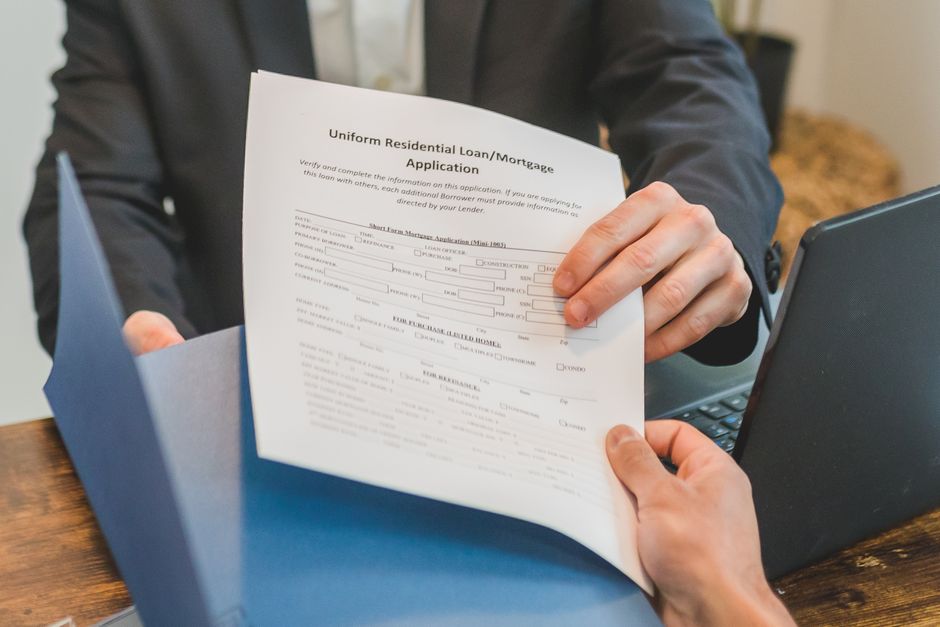
Photo: Jakub Zerdzicki via Pexels
This article is for educational purposes only and does not constitute financial or mortgage advice. Mortgage rates change daily and vary by lender, loan type, credit profile, and property details. Consult a HUD-approved housing counselor (find one at hud.gov) or licensed mortgage professional for guidance specific to your financial situation.
Recommended Resources
Disclosure: As an Amazon Associate, we earn a small commission from qualifying purchases at no extra cost to you. We only recommend products that genuinely support the topics covered in this article.
- First-Time Home Buyer: The Complete Playbook (~$18), The #1 Amazon bestseller in homebuying, covers down payment strategies, mortgage pre-approval, and avoiding rookie mistakes.
- 100 Questions Every First-Time Home Buyer Should Ask (~$17), Nearly a million copies sold, covers every question to ask your lender, agent, and inspector before signing anything.