 Maria Santos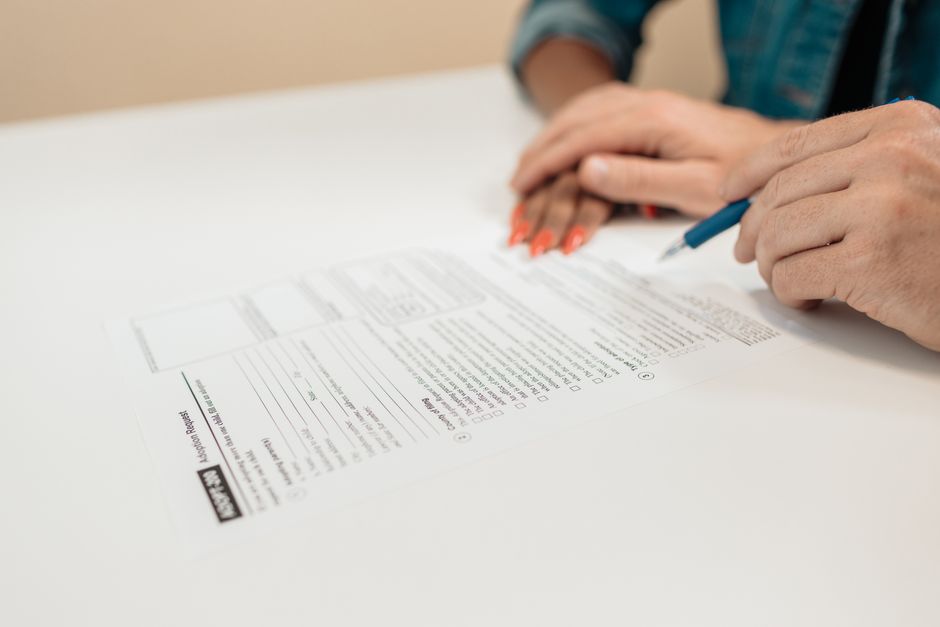
You’re sitting across from a loan officer, folder in hand, feeling prepared. Then they ask for your past two years of W-2s, your most recent 30 days of pay stubs, statements for every bank account you own, and proof of any gift funds you’re using toward the down payment. You hand over three of the five items and watch their expression shift. That moment, scrambling through your phone and email looking for documents you didn’t know you needed, is exactly what this guide prevents.
A mortgage application isn’t complicated. It’s thorough. Lenders are required to verify nearly every financial claim you make, and the documentation standards are stricter than most borrowers expect. Missing one piece doesn’t usually kill your loan, but it does slow things down. Sometimes by weeks. In a competitive market, that can mean losing the house.
Use this checklist to confirm each item meets lender-acceptance standards before your application appointment.
| Document | Typical Requirement | Readiness Threshold |
|---|---|---|
| Government-issued ID | Valid photo ID (driver's license or passport) | Not expired; name matches all other documents exactly |
| W-2 forms | Most recent 2 years | All pages present; employer name/EIN legible |
| Pay stubs | Most recent 30 consecutive days | Year-to-date earnings visible; no gaps in pay periods |
| Federal tax returns | Most recent 2 years (all schedules) | Signed or IRS transcript; self-employed need Schedule C/K-1 |
| Bank statements | Most recent 2-3 months, all accounts | Every page included (even blank); account number and name visible |
| Investment/retirement statements | Most recent quarterly statement | Vesting schedule noted if using for reserves |
| Gift funds letter | Required if using gifted down-payment money | Donor's name, relationship, amount, and statement that no repayment is expected |
| Large-deposit explanations | Any non-payroll deposit typically over $1,000-$2,000 | Paper trail showing source (sale receipt, transfer confirmation, etc.) |
| Rent payment history | 12 months of canceled checks or bank debits | Required mainly if no traditional credit history |
| Employment verification | Contact info for HR or written offer letter | If job change within 2 years, bring offer letter with salary and start date |
General information for comparison, confirm specifics for your situation.
Why Lenders Ask for So Much Documentation
Misconception: Most people think a 20% down payment is always required to qualify for a home loan. Reality: According to the Federal Reserve and Fannie Mae data, over 60% of home loans originated in 2024 had down payments below 20%. FHA loans allow as little as 3.5% down, while VA and USDA loans offer 0% down options for eligible borrowers. Even conventional loans frequently close with 5-10% down payments. The 20% threshold primarily affects mortgage insurance requirements, not eligibility, buyers with smaller down payments simply pay PMI (private mortgage insurance) until reaching 20% equity, making homeownership accessible far earlier than the traditional benchmark suggests.
Before you resent the paperwork, understand what’s driving it. Since the Dodd-Frank Act tightened lending standards after the 2008 housing crisis, lenders are legally required to verify a borrower’s ability to repay. This is called the Ability-to-Repay rule, and it puts the burden of proof on you.
Your loan file gets reviewed not just by the loan officer, but by an underwriter, and often a second underwriter if the loan is going to Fannie Mae or Freddie Mac. Each set of eyes is looking for inconsistencies. A large deposit in your checking account that doesn’t match your documented income? That triggers a paper trail request. A gap in employment? You’ll need a written explanation. A name that’s spelled slightly differently on two documents? Believe it or not, that can cause delays.
I’ve seen borrowers with excellent credit and plenty of assets lose weeks of time simply because they couldn’t document where a $4,000 deposit came from three months earlier. The scrutiny is real.
Identity and Personal Information Documents
Helpful resource: AmazonBasics Shredder for Sensitive Financial Documents is a top-rated option for this. (As an Amazon Associate this site earns from qualifying purchases.)
Start here. Before a lender can do anything, they need to verify who you are.
You’ll need a government-issued photo ID, typically a driver’s license or passport. If you’ve recently changed your name, bring documentation like a marriage certificate to explain any discrepancies between your ID and other records.
You’ll also need your Social Security number. The lender uses this to pull your credit report, verify your employment history, and check for any tax liens or public records. If you’ve had a name change or multiple addresses in recent years, be prepared for the verification process to take longer.
For non-U.S. citizens, lenders will want to see your visa, permanent resident card, or Employment Authorization Document. Loan eligibility varies by loan type, so consult with your lender early.
Income and Employment Documentation
This is where most borrowers hit friction, especially if their income situation is anything other than a single W-2 job.
For salaried or hourly W-2 employees:
- Two most recent years of W-2 forms
- Most recent 30 days of pay stubs
- Two most recent years of federal tax returns (some lenders require this, others don’t for straightforward W-2 income)
For self-employed borrowers or business owners:
- Two years of personal federal tax returns, all pages
- Two years of business federal tax returns if you own 25% or more of the business
- Year-to-date profit and loss statement, often prepared by a CPA
- Business bank statements for 12 to 24 months
Self-employment income is averaged over two years, and lenders use net income after deductions, not gross revenue. If you write off significant expenses, your qualifying income may be substantially lower than what you actually earn. I’ve had clients who made $200,000 in gross revenue but qualified as if they made $60,000 because of their deduction strategy. That’s a real tension between tax efficiency and borrowing power.
Other income types that require documentation:
- Social Security or disability: Award letter from SSA
- Alimony or child support: Court order and 12 months of bank statements showing receipt
- Rental income: Two years of tax returns showing Schedule E, plus lease agreements
- Investment or dividend income: Two years of returns and brokerage statements
If you’re switching jobs during the application process, tell your lender immediately. A job change mid-process can put your loan on pause, especially if it involves moving from salaried to commission-based work.
Asset and Down Payment Documentation
Lenders need to see that the money you’re bringing to closing is yours, and that after closing you’ll still have some cushion.
Standard documents required:
- Two to three months of bank statements for all accounts (checking, savings, money market)
- Two to three months of investment or retirement account statements
- Documentation of any large deposits not explained by regular income
That last point trips up a lot of buyers. Lenders are looking for what’s called “sourcing and seasoning” of funds. If money has been sitting in your account for 60 to 90 days, it’s generally considered seasoned and doesn’t need a paper trail. But a $15,000 transfer that shows up right before you apply? That needs documentation, a statement from the transferring account showing the withdrawal.
If you’re receiving a gift:
Many loan programs allow gift funds toward the down payment, but there are rules. The gift giver typically needs to provide a signed gift letter stating the money is a gift, not a loan, along with bank statements showing the funds leaving their account. Understanding your mortgage down payment options before you start the process will help you know what’s allowed under different loan programs.
Property-Related Documents
Once you have a property under contract, a second layer of documentation kicks in.
You’ll need to provide:
- Fully executed purchase and sale agreement
- Contact information for your real estate agent and the listing agent
- Homeowners insurance policy (or proof of coverage binder)
- Any seller concession disclosures
The lender will order an appraisal, a title search, and often a flood zone certification independently. You don’t arrange these, but you do need to respond quickly when they ask for additional information or clarifications that come out of those reports.
If you’re buying a condo, your lender will also need documentation from the homeowners association: the HOA’s master insurance policy, budget, reserve study, and pending litigation disclosure. Condo approvals can take extra time, so flag this early.
Loan-Type-Specific Requirements
The base checklist applies to almost every loan, but certain loan types add their own layers.
FHA loans are popular with first-time buyers, but they have specific requirements around minimum credit scores, down payment amounts, and the condition of the property. You can review the full picture at our guide on FHA loan requirements and benefits.
Conventional loans follow Fannie Mae and Freddie Mac guidelines. For a full breakdown of what those standards look like, our conventional loan requirements guide walks through credit thresholds, debt-to-income limits, and reserve requirements.
VA loans require a Certificate of Eligibility, which you can obtain through the VA or often through your lender directly. You’ll also need your discharge paperwork (DD-214).
Jumbo loans, which exceed the conforming loan limits set annually by the FHFA, come with more stringent income, asset, and reserve requirements. If you’re borrowing above those thresholds, check out our deep dive into jumbo loan requirements.
No matter which loan type you’re applying for, your debt-to-income ratio is one of the most critical qualifying factors. Understanding how lenders calculate it before you apply will help you avoid surprises. Our article on debt to income ratio for mortgage explains exactly how that number works.
Step-by-Step: How to Organize Your Application Package
Here’s a practical sequence to follow starting about 60 to 90 days before you plan to apply.
- Pull your own credit report. Check for errors at AnnualCreditReport.com. Dispute any inaccuracies before you apply. Even a 20-point credit score improvement can affect your rate tier.
- Gather two years of tax returns. Both personal and business if applicable. If you’re missing a year, request a transcript directly from the IRS using Form 4506-C. This takes time, so start early.
- Collect W-2s and pay stubs. Most employers can provide these through HR or payroll portals.
- Print 60 to 90 days of bank statements. All pages, even blank ones. Underwriters need complete documents.
- Document any large deposits. For anything that doesn’t match your regular pay schedule, find the source and save the paper trail.
- Set up a dedicated folder. Digital or physical, just keep it organized. You’ll be asked to re-submit documents if they expire (most are only valid for 30 to 60 days in an active loan file).
- Talk to a HUD-approved housing counselor if you’re unsure where you stand. HUD-approved housing counselors provide free or low-cost guidance on exactly this kind of preparation.
- Get pre-approved, not just pre-qualified. Pre-approval involves actual document verification. Our guide on how to get pre-qualified for a mortgage explains the difference and what to expect.
If you want a resource to work through alongside this, Freddie Mac’s home buyer resources include educational tools and checklists that complement what you’re doing here.
A mortgage application rewards preparation more than almost any other financial process I know. You can’t control interest rates, appraisal outcomes, or title issues. But you can control whether your file is complete and organized from day one. The borrowers I’ve watched sail through closings weren’t always the ones with the highest incomes or the best credit scores. They were the ones who showed up ready, with every document already in the folder. That’s the advantage you can actually build before you ever walk through a lender’s door.
Sources & References
- CFPB, Checklist for mortgage documents, Supports standard mortgage documentation requirements
- HUD, Buying a Home, Supports lender verification process overview
Photo: Kindel Media via Pexels
This article is for educational purposes only and does not constitute financial or mortgage advice. Mortgage rates change daily and vary by lender, loan type, credit profile, and property details. Consult a HUD-approved housing counselor (find one at hud.gov) or licensed mortgage professional for guidance specific to your financial situation.
Recommended Resources
Disclosure: As an Amazon Associate, we earn a small commission from qualifying purchases at no extra cost to you. We only recommend products that genuinely support the topics covered in this article.
- First-Time Home Buyer: The Complete Playbook (~$18), The #1 Amazon bestseller in homebuying, covers down payment strategies, mortgage pre-approval, and avoiding rookie mistakes.
- 100 Questions Every First-Time Home Buyer Should Ask (~$17), Nearly a million copies sold, covers every question to ask your lender, agent, and inspector before signing anything.