 Susan Taylor
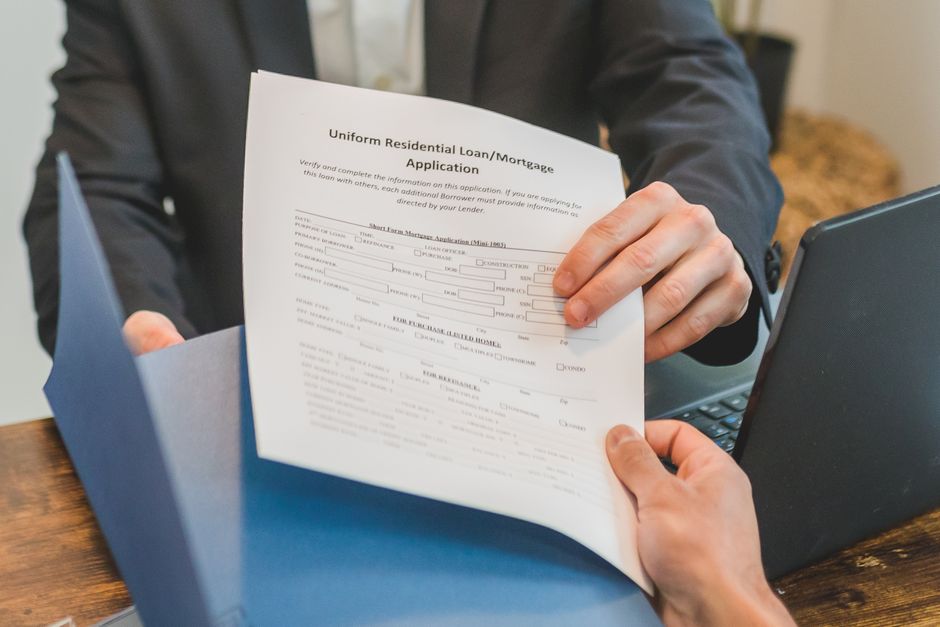
Something quietly historic happened in the mortgage market this spring, and most people outside the industry didn’t notice. Gen Z, buyers born roughly between 1997 and 2012, locked in 20% of all purchase mortgages in Q2 2026, the largest share this generation has ever held, according to ICE Mortgage Technology’s July 2026 Mortgage Monitor. That’s 1 in every 5 home purchase rate locks. For context, Baby Boomers, a generation that owned the housing market for decades, now account for just 11% of purchase lending. The generational handoff that everyone predicted is actually happening. Right now.
I’ll be honest, when I first saw these numbers from ICE’s July 6th report, I expected them to tell a simple story: young buyers finally got some relief and jumped in. The real story is messier. Rates are still bruising. The 30-year fixed climbed to 6.70% as of July 23, 2026. Home prices re-accelerated in June to their strongest annual pace in over a year. And the median monthly mortgage payment hit $2,198 in May 2026, per the Mortgage Bankers Association’s purchase applications payment index. Gen Z isn’t buying into a friendly market. They’re buying anyway, and they’re getting creative about how.
What surprised me most was where the money is coming from. Alternative down payment sources, things like family gifts, personal loans, and retirement account withdrawals, hit a 7-year high in 2026, making up 29% of all purchase down payments. One in five Gen Z buyers used a gift (13%) or borrowed funds (8%) to close. That’s not a footnote. That’s a structural shift in how a generation is financing homeownership.
- Gen Z hit a record 20% share of all purchase rate locks in Q2 2026, per ICE Mortgage Monitor.
- The median monthly mortgage payment reached $2,198 in May 2026, per the MBA.
- 29% of 2026 purchase down payments came from gifts, loans, or retirement withdrawals, a 7-year high.
- Gen Z represents 27% of FHA purchase lending and nearly one-third of all first-time homebuyer loans.
- Gen Z and Millennials together now control nearly two-thirds of the 2026 purchase mortgage market.
FHA Is Doing a Lot of the Heavy Lifting
Gen Z’s record market share isn’t spread evenly across loan types. According to the ICE data, Gen Z makes up 27% of FHA purchase lending nationally and nearly one-third of all first-time homebuyer loans. That tracks. FHA loans require as little as 3.5% down if your credit score is 580 or above, and they’re more forgiving on debt-to-income ratios than conventional loans.
The tradeoff is real, though. Every FHA loan carries mortgage insurance premium (MIP), both upfront (1.75% of the loan amount) and annual (typically 0.55% on a 30-year loan). On a $350,000 loan, that’s $6,125 upfront and about $1,925 a year baked into your payment. FHA is accessible, but it isn’t free. And unlike private mortgage insurance on a conventional loan, FHA’s annual MIP doesn’t automatically drop off once you hit 20% equity if you put less than 10% down. You’re paying it for the life of the loan.
That said, for a buyer with limited savings and a credit score in the mid-600s, FHA often beats the alternatives. The key is understanding what you’re signing up for, not just what gets you in the door.
The Down Payment Problem Is Getting Solved in Uncomfortable Ways
Helpful resource: AmazonBasics Shredder for Sensitive Financial Documents is a top-rated option for this. (As an Amazon Associate this site earns from qualifying purchases.)
The 29% figure for alternative down payment sources deserves more attention than it’s getting. A 7-year high means this isn’t a blip. It reflects a housing market where prices have outrun savings rates for years, and buyers are improvising.
Here’s a quick breakdown of the three main approaches and what they actually cost you:
| Source | How It Works | Real Risk |
|---|---|---|
| Family gift | Parents or relatives transfer funds, no repayment required | Must be documented; lenders require a gift letter; can affect estate planning |
| Personal loan / borrowed funds | Borrower takes a personal loan to cover down payment | Increases your debt-to-income ratio; lender must know about it; can sink loan approval |
| Retirement withdrawal | Early 401(k) or IRA withdrawal (pre-59½) | 10% penalty plus ordinary income taxes; you lose compounding on that money permanently |
Borrowed funds are the one that makes me nervous. Some loan programs allow it, but if you’re borrowing your down payment, you’re layering more debt on top of a mortgage in a 6.70% rate environment. The math can get ugly fast. A $20,000 personal loan at 12% over 5 years adds roughly $445 a month to your obligations. That could be the number that pushes you over the lender’s debt-to-income limit, or just over your own budget’s breaking point.
Family gifts are cleaner, but they’re not universal. Not everyone has parents who can write a five-figure check.
What the Gen Z/Millennial Dominance Actually Means for the Market
Gen Z and Millennials together account for nearly two-thirds of 2026’s purchase lending market, per ICE’s Mortgage Monitor. That’s a massive concentration of buying power in two generations who came of age during financial crises, pandemic disruptions, and student loan mountains.
What this means for buyers is that lenders are paying attention. Products targeting first-time buyers, down payment assistance programs, and lower credit score thresholds are increasingly competitive because lenders want this business. That’s actually good news for buyers who know how to shop. Don’t take the first offer. Rate shopping on a $350,000 loan, even finding 0.25% better, saves you roughly $18,000 over 30 years.
The Affordability Math Is Still Hard, Even With the Momentum
I want to be careful not to spin this as a feel-good story. Gen Z buying more mortgages doesn’t mean Gen Z is buying comfortably. As HousingWire reported in July 2026, this surge is happening against a backdrop of re-accelerating home prices and rates sitting at 6.70%. The median $2,198 monthly payment is before property taxes, homeowners insurance, and HOA fees, if applicable.
A buyer at that median payment, on a 30-year fixed at 6.70%, is looking at roughly a $330,000 loan. Add a 10% down payment and you’re buying a $367,000 home. The National Association of Realtors puts the median existing home sale price above $400,000 in 2026. The gap between what’s affordable and what’s available remains real.
That doesn’t mean buying is wrong. It means buyers need to enter with eyes open, not just excitement.
The record-breaking Gen Z numbers in ICE’s July 2026 data are worth celebrating as a milestone. But they’re also a warning label. This generation is getting into the market through grit, family help, and government-backed loan programs, not because affordability got easy. If you’re a Gen Z buyer right now, or a Millennial thinking about a refi, the same advice applies: understand every cost buried in your loan, know where your down payment money is actually coming from, and talk to a HUD-approved housing counselor before you sign. This is one of the biggest financial decisions of your life, and no article replaces professional guidance tailored to your specific situation.
Sources
- ICE Mortgage Monitor: Gen Z Accounts for Record 1 in 5 Purchase Mortgage Locks (July 6, 2026)
- Gen Z Posts Record Share of Mortgage Rate Locks in Q2 2026 , HousingWire (July 2026)
- Gen Z Claims a Record Share of US Purchase Mortgage Market , Mortgage Professional America (July 2026)
- Move Over Millennials: Gen Z Now Accounts for One in Five Home Purchases , New American Funding (July 2026)
- Gen Z Just Hit A Record Share Of The Mortgage Market , Inman (July 6, 2026)
Photo: Kindel Media via Pexels
This article is for educational purposes only and does not constitute financial or mortgage advice. Mortgage rates change daily and vary by lender, loan type, credit profile, and property details. Consult a HUD-approved housing counselor (find one at hud.gov) or licensed mortgage professional for guidance specific to your financial situation.
Recommended Resources
Disclosure: As an Amazon Associate, we earn a small commission from qualifying purchases at no extra cost to you. We only recommend products that genuinely support the topics covered in this article.
- First-Time Home Buyer: The Complete Playbook (~$18), The #1 Amazon bestseller in homebuying, covers down payment strategies, mortgage pre-approval, and avoiding rookie mistakes.
- 100 Questions Every First-Time Home Buyer Should Ask (~$17), Nearly a million copies sold, covers every question to ask your lender, agent, and inspector before signing anything.