 Susan Taylor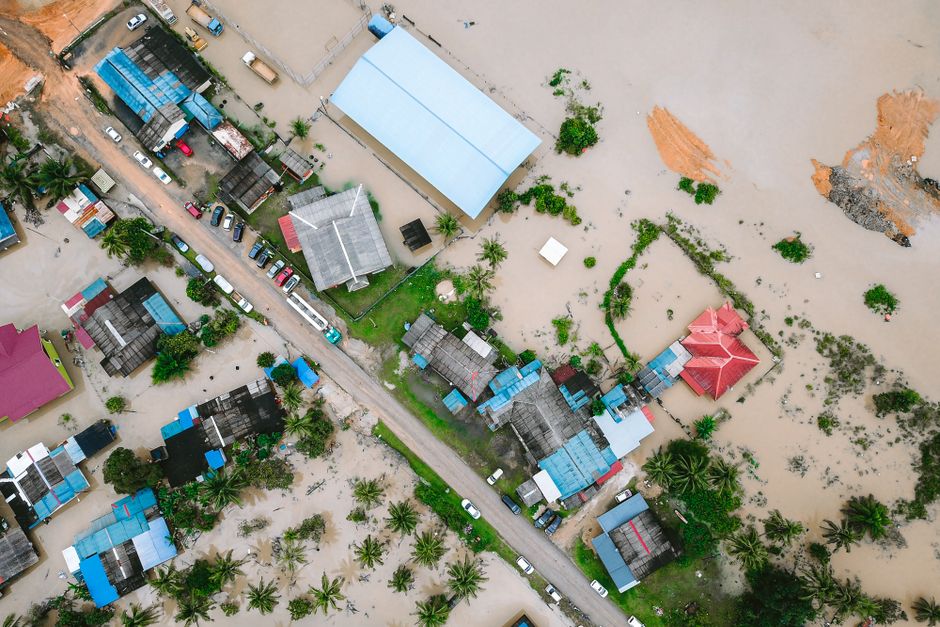
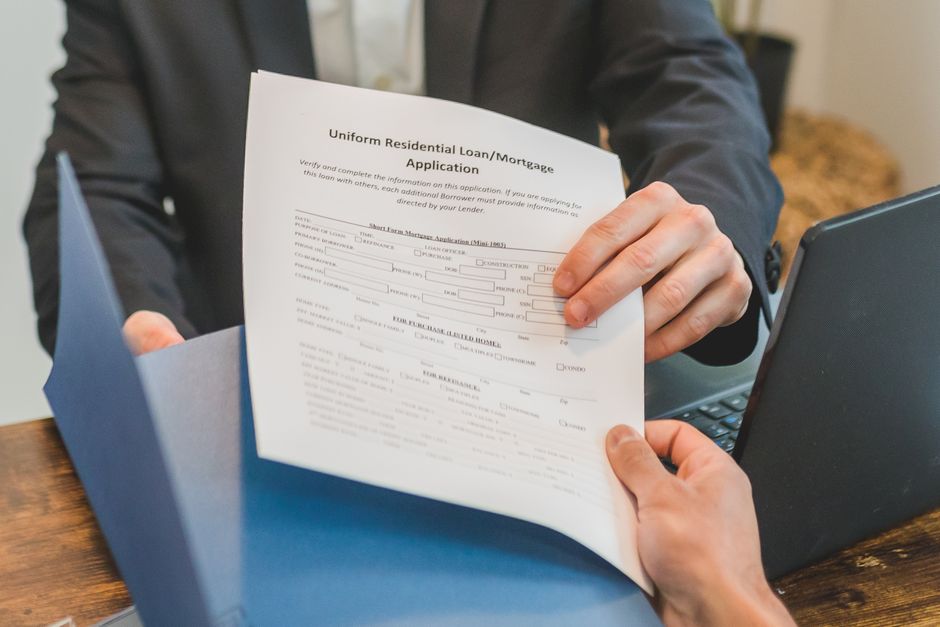
Your lender’s flood insurance requirement probably felt like it came out of nowhere. You were so close to the finish line, and then suddenly there’s this extra insurance you’ve never thought about, with a price tag that made you do a double-take. I’ve sat across from a lot of people in that exact spot, and the first thing I want you to know is: this is not a conspiracy between your lender and an insurance company. The requirement is real, it’s federally mandated in most cases, and once you understand the “why,” the whole thing makes a lot more sense.
Here’s what I tell people first: flood insurance being required doesn’t mean your home is in danger. It means your home falls into a zone the government has mapped as having at least a 1% annual chance of flooding. That sounds small, but over a 30-year mortgage, that actually adds up to about a 26% chance. Your lender is protecting their collateral, but honestly? They’re also protecting you from a loss that would otherwise wipe you out completely.
Let me walk you through how this works, what it actually costs, and where people get it wrong, because I made some of those mistakes myself when I first started helping borrowers through this.
- Federal law requires flood insurance if your home is in a FEMA Special Flood Hazard Area (SFHA) and you have a federally backed mortgage.
- The average NFIP policy costs around $888/year nationally, but coastal and high-risk zones can run $2,000–$4,000+.
- Your lender sets the minimum coverage amount, but it may not fully cover your contents or rebuilding costs.
- You can dispute your flood zone designation with a FEMA Letter of Map Amendment (LOMA), which has eliminated the requirement for some borrowers entirely.
- Private flood insurance is now a real alternative to NFIP in many states, and sometimes cheaper.
Why Your Lender Is Requiring This
The Flood Disaster Protection Act of 1973 and the National Flood Insurance Reform Act of 1994. Those two laws are the reason your loan officer is telling you that you can’t close without a flood policy. If your property sits in what FEMA calls a Special Flood Hazard Area (SFHA), and your loan is federally backed (that means FHA, VA, USDA, or any conventional loan sold to Fannie Mae or Freddie Mac, which is almost all of them), your lender is legally required to verify you have flood insurance. They don’t have a choice. If they close your loan without it, they face significant civil penalties.
The SFHA designation covers what FEMA calls the “100-year floodplain.” This is any area with a 1% or greater annual flood risk. Flood maps show these zones as “Zone A” (no base flood elevation data) or “Zone AE” (detailed data available), and coastal high-risk areas as “Zone V” or “Zone VE.” If you’re in one of those zones, the requirement kicks in automatically at closing.
One thing I didn’t fully understand until I started reading loan files closely: the lender’s required minimum coverage amount is the lower of three things. The outstanding principal balance of the loan, the maximum available under NFIP ($250,000 for the structure), or the replacement cost value of the building. Most people assume the lender is covering everything. They’re not. Your personal belongings, your finished basement, and any amount over $250,000 in structure coverage? That’s on you to think about separately.
What Flood Insurance Actually Costs
Helpful resource: Locking File Box for Mortgage and Financial Documents is a top-rated option for this. (As an Amazon Associate this site earns from qualifying purchases.)
This is where I want to be honest with you, because the range is genuinely wide.
FEMA’s National Flood Insurance Program (NFIP), which has historically been the main source of flood coverage, rolled out a new pricing model called Risk Rating 2.0 back in late 2021. As of 2026, all existing and new policies are priced under this system. The idea was to make premiums reflect actual risk more accurately rather than just your flood zone designation. In practice, that meant some homeowners saw their premiums drop, and a lot of coastal homeowners saw significant increases.
The national average sits around $888 per year as of this year, but that number is almost meaningless in practice. What you actually pay depends on your specific property’s elevation, distance from water, construction type, first-floor height, and replacement cost. A home in coastal Florida can easily run $3,000 to $5,000 annually. A home in a low-to-moderate risk zone in a Midwestern state might be $400.
Here’s a comparison that helps put your options side by side:
| Coverage Source | Structure Max | Contents Max | Basement Coverage | Avg. Annual Range |
|---|---|---|---|---|
| NFIP (federal program) | $250,000 | $100,000 | Very limited | $500 – $4,500+ |
| Private flood insurance | Varies (often higher) | Varies | Often broader | $400 – $5,000+ |
| Excess flood (added on) | Above NFIP limits | Above NFIP limits | Depends on policy | $300 – $2,000+ |
Private flood insurance has grown a lot. As of 2026, most major states have multiple private carriers writing flood policies, and lenders are now required to accept private policies that meet certain standards (that was clarified under federal law). Sometimes private insurance is significantly cheaper for lower-risk properties, and sometimes it offers broader coverage, including basement contents, which NFIP basically doesn’t touch.
When You Think the Requirement Might Be a Mistake
You might be wondering: what if FEMA has my property mapped wrong? This happens more than you’d think. Flood maps aren’t updated constantly, and in some areas they’re decades old. If your property was built with fill, is elevated, or sits on ground that’s genuinely higher than the floodplain, you might have a legitimate case for a map amendment.
The tool for this is called a Letter of Map Amendment (LOMA). It’s a formal request to FEMA saying “hey, my property is actually above the base flood elevation, and here’s a licensed surveyor’s elevation certificate to prove it.”
I’ve seen this work. Maria, a reader who emailed me earlier this year from coastal Georgia, was facing a $2,900 annual premium her lender required before closing. Her husband had a survey done ($450 in fees) showing the lowest adjacent grade of their lot was above the base flood elevation. FEMA issued a LOMA within about 60 days, the lender accepted it, and the flood insurance requirement was removed entirely. The survey paid for itself many times over.
The process: hire a licensed surveyor to complete an Elevation Certificate, submit it with FEMA’s MT-EZ form (for single-lot requests), and wait. FEMA has 60 days to respond. If approved, your lender must remove the mandatory purchase requirement, though some lenders will still strongly encourage you to maintain voluntary coverage.
That said, this won’t work for everyone. If your home genuinely sits in a floodplain, FEMA isn’t going to issue a LOMA just because you asked nicely.
The Escrow Trap Nobody Warns You About
Here’s something that catches people off guard, and I include myself in this when I was new to reading disclosures carefully. Lenders are allowed to escrow your flood insurance premium right alongside your property taxes and homeowner’s insurance. That’s normal. What’s less obvious is what happens when your premium increases.
FEMA’s Risk Rating 2.0 allows for premium increases of up to 18% per year on existing policies, which can compound over time. If your escrow payment is recalculated and your flood premium went up $600 in a year, your monthly mortgage payment could jump meaningfully, even if your rate and principal payment haven’t changed. I’ve had people contact me confused why their “fixed-rate mortgage” suddenly costs more per month, and nine times out of ten it’s an escrow adjustment, often flood insurance.
The Consumer Financial Protection Bureau (CFPB) has good plain-language guidance on how escrow accounts work and what your rights are if you think there’s an error in the calculation. Worth bookmarking.
Practical Steps If You’re Facing This Requirement
A quick walkthrough of what to actually do:
Get an Elevation Certificate first. This document, completed by a licensed surveyor, shows your property’s elevation relative to the base flood elevation. It costs roughly $300 to $700 depending on your area and surveyor, and it’s the single most useful piece of paper you can have. With it, you can get accurate NFIP quotes AND private market quotes, and you can evaluate whether a LOMA makes sense.
Shop both NFIP and private carriers. Don’t just take whatever your insurance agent quotes first. An independent agent who writes both NFIP and private flood policies can run both scenarios. In my experience, the difference for a modest home in a lower-risk AE zone can be $400 to $700 per year.
Check whether a HUD-approved housing counselor in your area offers pre-purchase counseling. Many do, and they can help you interpret your flood zone designation and understand your options before you sign anything.
If you’re buying a home that currently has an NFIP policy, ask whether it’s transferable. Existing NFIP policies can often be assigned to the new buyer, which sometimes locks in a lower grandfathered rate. This is a real negotiating point that almost nobody asks about.
For a deeper look at how to compare coverage options, resources like this home-buying guide on Amazon can help you ask the right questions before you sit down with your lender. (The site may earn a small commission on purchases.)
Sources
- FEMA National Flood Insurance Program: Official program details, zone definitions, Risk Rating 2.0 methodology, and coverage limits.
- Consumer Financial Protection Bureau (CFPB) Owning a Home: Plain-language guidance on escrow, mortgage requirements, and borrower rights.
- FEMA Flood Map Service Center: Official source for flood zone designations and LOMA application information.
- Flood Disaster Protection Act of 1973 and National Flood Insurance Reform Act of 1994: Federal statutes establishing mandatory purchase requirements for federally backed mortgages.
- HUD Housing Counseling Program: HUD-approved counselors who can provide pre-purchase guidance including flood zone analysis.
Photo: Pok Rie via Pexels
This article is for educational purposes only and does not constitute financial or mortgage advice. Mortgage rates change daily and vary by lender, loan type, credit profile, and property details. Consult a HUD-approved housing counselor (find one at hud.gov) or licensed mortgage professional for guidance specific to your financial situation.
Recommended Resources
Disclosure: As an Amazon Associate, we earn a small commission from qualifying purchases at no extra cost to you. We only recommend products that genuinely support the topics covered in this article.
- First-Time Home Buyer: The Complete Playbook (~$18), The #1 Amazon bestseller in homebuying, covers down payment strategies, mortgage pre-approval, and avoiding rookie mistakes.
- 100 Questions Every First-Time Home Buyer Should Ask (~$17), Nearly a million copies sold, covers every question to ask your lender, agent, and inspector before signing anything.