 Maria Santos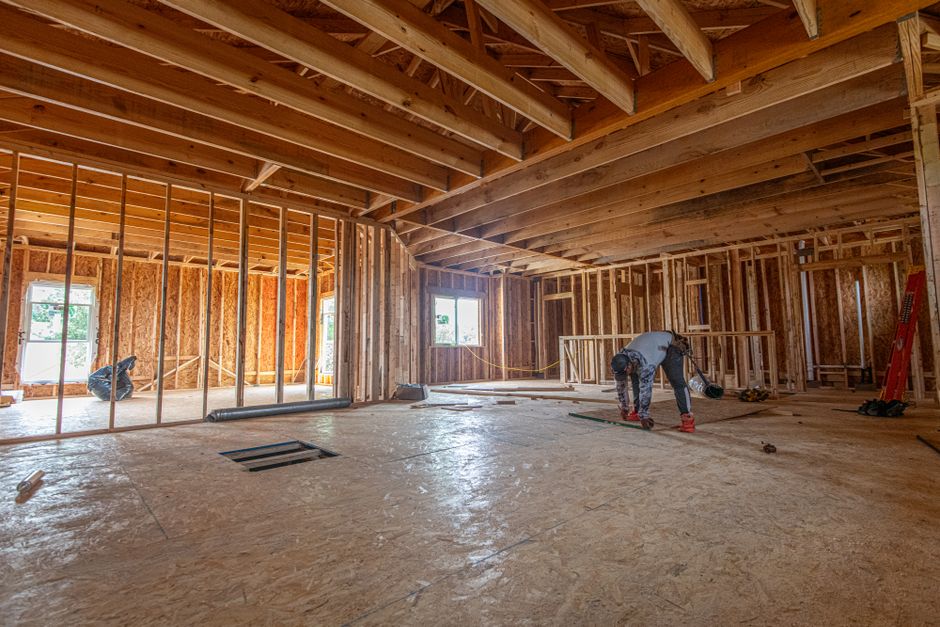
Only about 20% of people building a custom home have ever taken out a construction loan before. That number comes from surveys of first-time builders, and honestly, it tracks with what I saw on the job. Almost every borrower who sat across from me in the underwriting office thought a construction loan worked basically like a regular mortgage. It doesn’t. And the gap between what people expected and what they actually signed up for caused more financial stress than almost anything else I dealt with.
So let’s fix that.
What a Construction Loan Actually Is
A regular mortgage is simple in concept: you borrow a lump sum, the lender gets a lien on a house that already exists, and you start paying principal and interest. A construction loan is different in almost every meaningful way.
The lender isn’t securing a finished house. They’re betting on a house that doesn’t exist yet, built by a contractor who might hit delays, using a budget that almost always runs over. Because of that risk, they structure things completely differently.
Here’s the core of it: instead of giving you the full loan amount on day one, the lender releases money in stages called “draws.” Your contractor finishes the foundation, a bank inspector comes out and confirms it, and then the lender releases the next chunk of money. This keeps happening through framing, roofing, rough mechanical work, finishes, and completion. I’ve seen projects with five draws. I’ve seen projects with twelve. The number depends on your lender and your contract.
During the construction phase, you typically pay interest only on the money that’s been drawn, not the full loan amount. So if you have a $400,000 construction loan and only $120,000 has been released so far, you’re paying interest on $120,000. That sounds great, but what most people don’t realize is that the construction phase can drag on for 12 to 18 months, and you’re also paying rent or a mortgage somewhere else the whole time.
The Two Main Types
Helpful resource: Mortgages for Dummies by Eric Tyson is a top-rated option for this. (As an Amazon Associate this site earns from qualifying purchases.)
There are really two flavors of construction loans, and picking the wrong one can cost you thousands in closing costs.
Construction-to-permanent loans (sometimes called “single-close” or “one-time-close”) convert automatically into a regular mortgage when construction wraps up. You close once, pay closing costs once, and your rate locks in at the start (though rate lock specifics vary a lot by lender and loan program).
Stand-alone construction loans (sometimes called “two-close”) are exactly what they sound like. You get a short-term construction loan to build, and then when the house is done, you pay it off by taking out a separate mortgage. Two closings. Two sets of closing costs. More flexibility to shop for the best permanent rate at the end, but you’re gambling that rates and your financial picture will cooperate.
I’ve seen buyers choose stand-alone loans because they were hoping rates would drop by the time they finished building. Sometimes that works out. Sometimes it really doesn’t. The Federal Housing Finance Agency (FHFA) tracks rate trends, and I’d rather you look at their data than guess.
| Feature | Construction-to-Permanent | Stand-Alone Construction |
|---|---|---|
| Number of closings | 1 | 2 |
| Closing costs | Paid once | Paid twice |
| Rate lock timing | Set at start | Set when permanent loan closes |
| Rate risk during build | Lower | Higher |
| Flexibility | Less | More |
| Typical term during build | 12-18 months | 12-18 months |
| Best for | Buyers who want predictability | Buyers confident in rate direction |
What Lenders Actually Want to See
This is where a lot of people get surprised. Construction loans are harder to qualify for than regular mortgages, and not by a little.
Down payments are typically higher: 20-25% is common, though some government-backed programs (like VA and USDA construction loans, which exist but are harder to find lenders who offer them) can go lower. Your credit score requirements tend to be stricter too. I’m not going to quote you a specific number because lenders vary, but if your score is below 680, your options narrow significantly.
Beyond your finances, lenders want to vet your builder. They want to see that your contractor is licensed, insured, and has a track record. They’ll ask for a signed contract, a detailed budget, and sometimes a complete set of architectural plans. I remember one borrower who’d already verbally agreed on a handshake deal with his cousin to build the house. That was a hard conversation.
One thing that surprises almost everyone: you need to own the land (or be buying it as part of the loan) before or at closing. If you’re planning to use equity in land you already own as part of your down payment, that works, but it needs to be in your name and appraised.
These are typical floors, not guarantees. Lenders can and do require more.
The Draw Schedule: Where Things Get Messy
I want to spend more time here because this is where projects actually fall apart.
When your contractor needs money to pay subcontractors, they submit a draw request to you, and you request the draw from the lender. The lender sends out an inspector (you’ll pay for each inspection, usually $150-$300 per visit). The inspector confirms the work is done. The lender releases the funds.
That sounds fine. Here’s what actually happens: the inspector can’t get out for five days. The lender takes another three days to process the release. Your contractor, who doesn’t have cash reserves, can’t pay the framing crew in the meantime. The framing crew moves to another job. Now you’ve lost two weeks of schedule.
I’ve seen this play out more times than I care to count. The fix is to choose a contractor who has working capital, not just someone who’s counting on each draw to fund the next phase. Ask them directly how they handle draw delays. The good ones will have a clear answer.
Worked example 1: A couple in suburban Phoenix budgeted $485,000 to build a 2,100 sq ft home. Action: They chose a single-close construction loan, 20% down, 12-month build window. The contractor hit material delays on windows (a supply issue that was extremely common in late 2024 and is still occasionally relevant today). Result: Construction ran 4 months over, triggering a loan extension fee of $2,900 and an additional four months of rent totaling roughly $6,800. Total overrun they hadn’t budgeted for: about $9,700.
Worked example 2: A buyer in rural Tennessee owned 3 acres free and clear, appraised at $67,000. Action: She used that equity as her down payment toward a $290,000 construction loan for a 1,400 sq ft home, opting for a two-close stand-alone loan. Result: Build came in at $278,000, and she refinanced into a 30-year conventional at a competitive rate when construction finished. The two-closing structure cost her an extra $4,200 in closing costs but gave her flexibility on the permanent rate.
The Budget Reality Nobody Talks About
According to the National Association of Home Builders, cost overruns on custom home construction run 10-15% on average, and that’s for experienced builders with seasoned clients. First-timers? Higher.
Your lender will require a contingency reserve, typically 10% of the construction budget, baked into the loan. If you’re budgeting $350,000 to build, expect the lender to require a $385,000 loan to cover contingency. That money sits in reserve and gets released only if actual overruns require it. If you don’t use it, it doesn’t become a windfall; it just doesn’t get drawn.
What most people don’t realize is that construction loan interest rates run higher than regular mortgage rates, currently (as of July 2026) often 1 to 1.5 percentage points above the 30-year fixed rate. That spread is the lender’s compensation for the higher risk and complexity of a construction loan. The interest-only payments during the build are lower than a full mortgage payment would be, but you’re paying a premium rate on those draws. It adds up.
Worked example 3: A builder in Colorado draws down $320,000 over 14 months on a construction loan at 8.2% (hypothetical rate for illustration, not a current quote). At average outstanding balance of $210,000, interest-only payments run roughly $1,435/month. Total interest paid during construction: approximately $20,090. That’s before the permanent mortgage starts.
Freddie Mac’s home buyer resources have solid explainers on how to prepare financially for a major purchase like this, and I’d send any builder toward their budget planning tools before they sit down with a lender.
Sources
- National Association of Home Builders (NAHB): Industry data on construction costs, builder surveys, and cost overrun statistics
- Federal Housing Finance Agency (FHFA): Rate trends, loan limits, and conforming loan guidelines relevant to construction-to-permanent products
- Freddie Mac Home Buyer Resources: Budget preparation tools, affordability calculators, and first-time buyer education
- Consumer Financial Protection Bureau (CFPB): Plain-language explanations of construction loan disclosures, closing cost requirements, and borrower rights
- U.S. Census Bureau, Survey of Construction (2026): Annual data on average time to build a single-family home and regional construction cost benchmarks
If you want to dig deeper into the financial planning side before talking to a lender, a workbook like The Complete Guide to Building Your Own Home (available on Amazon, and yes, this site may earn a commission on purchases) can help you build a realistic budget and project timeline before anyone asks for your tax returns.
This article is for educational purposes only and does not constitute financial or mortgage advice. Mortgage rates change daily and vary by lender, loan type, credit profile, and property details. Consult a HUD-approved housing counselor (find one at hud.gov) or licensed mortgage professional for guidance specific to your financial situation.
Recommended Resources
Disclosure: As an Amazon Associate, we earn a small commission from qualifying purchases at no extra cost to you. We only recommend products that genuinely support the topics covered in this article.
- First-Time Home Buyer: The Complete Playbook (~$18), The #1 Amazon bestseller in homebuying, covers down payment strategies, mortgage pre-approval, and avoiding rookie mistakes.
- 100 Questions Every First-Time Home Buyer Should Ask (~$17), Nearly a million copies sold, covers every question to ask your lender, agent, and inspector before signing anything.