 Susan Taylor
Roughly one in three American workers now earns some or all of their income through 1099 work. That number, from the Bureau of Labor Statistics’ most recent contingent worker survey, would have shocked mortgage underwriters from my era who were trained to see W-2s as the gold standard and everything else as a problem. I spent years on the other side of that desk, and I’ll be honest: the way self-employment income was handled by lenders was often rigid to the point of being unfair. That’s changed some. Not enough, but some.
So if you’re self-employed, a freelancer, an independent contractor, or you run a one-person business and you’re wondering whether you can actually get approved for a mortgage, here’s the short answer: yes, usually. The longer answer is that you can, but it’s going to require more documentation, more patience, and a willingness to understand exactly what lenders are looking for. You might be wondering whether your situation is too complicated, whether your income fluctuations will kill your chances, or whether lenders will even take you seriously. Those are the right questions. Let me work through them.
- 1099 borrowers can qualify for conventional, FHA, and bank statement loans as of 2026.
- Lenders use a 2-year average of net self-employment income, not gross revenue, which often shocks applicants.
- Bank statement loans exist for borrowers who can't show strong tax returns but have solid cash flow.
- A debt-to-income ratio below 43% is the standard threshold; 36% or lower gives you better rates.
- Two years of self-employment history is the usual minimum, but some lenders accept 12 months with caveats.
What Lenders Actually See When They Look at Your Income
Here’s what trips up almost every 1099 borrower the first time. You might be earning $120,000 a year in gross revenue. You feel solid. Then the underwriter looks at your Schedule C and sees that after business deductions, your net income is $67,000. That’s the number they’re working with. Not what hit your bank account. Not what you invoiced. The taxable income on your return.
I’ve sat with clients who were genuinely blindsided by this. One woman in Phoenix, a graphic designer who’d been freelancing successfully for four years, assumed her $95,000 in 1099 income would comfortably qualify her for the home she wanted. Her CPA had done excellent work keeping her tax bill low, which meant her Schedule C showed net income around $51,000. The deductions that saved her money at tax time cost her purchasing power at the mortgage office. That’s the painful irony of self-employment lending.
Lenders will typically take a two-year average of your net self-employment income and use that as your qualifying figure. If year one was $45,000 net and year two was $71,000 net, they’ll likely average it to $58,000. Some lenders will also require that income be stable or increasing. If your income dropped significantly from year one to year two, some underwriters will use only the lower year as a conservative measure.
The Two Main Routes: Conventional vs. Bank Statement Loans
Helpful resource: The Total Money Makeover by Dave Ramsey is a top-rated option for this. (As an Amazon Associate this site earns from qualifying purchases.)
Not all mortgage products treat 1099 income the same way, and choosing the right one matters more than most people realize.
Conventional loans (backed by Fannie Mae or Freddie Mac) are available to 1099 borrowers but rely on your tax returns. Specifically, lenders will pull your 1040, your Schedule C or S-corp K-1, and two years of business returns if applicable. The Federal Housing Finance Agency (FHFA) publishes the underwriting guidelines that govern these loans, and self-employment documentation requirements are spelled out clearly there. This is worth reading if you want to understand exactly what box your lender is trying to check.
Bank statement loans are a different animal entirely. These programs, sometimes called non-QM (non-qualified mortgage) loans, let lenders use 12 to 24 months of personal or business bank statements to verify income rather than tax returns. For a freelancer who writes off a lot of legitimate business expenses, this can be a lifeline because the lender is looking at actual cash flow, not the net income your CPA optimized for tax purposes.
The trade-off? Bank statement loans typically carry higher interest rates than conventional loans, sometimes 1 to 2 percentage points higher as of 2026, and they often require larger down payments (10 to 20% is common). They’re not predatory, but they’re priced for the additional risk the lender is taking by stepping outside Fannie/Freddie guidelines.
Here’s a side-by-side so you can see the real differences:
| Feature | Conventional (Fannie/Freddie) | Bank Statement Loan | FHA (Self-Employed) |
|---|---|---|---|
| Income verification | Tax returns (2 years) | Bank statements (12-24 months) | Tax returns (2 years) |
| Minimum self-employment history | 2 years | 12-24 months (varies by lender) | 2 years |
| Typical minimum down payment | 3-5% | 10-20% | 3.5% |
| Interest rate premium vs. W-2 borrower | Minimal if docs are clean | 1-2% higher than conventional | Minimal if docs are clean |
| Credit score minimum (typical) | 620 | 660-700 | 580 (with 3.5% down) |
| DTI ceiling | 45-50% | 43-50% (lender-dependent) | 43-57% (with compensating factors) |
| Who it’s best for | Strong net income, low write-offs | High gross revenue, many deductions | Lower credit, limited down payment |
The chart above shows something I explain to almost every self-employed client: the number the lender uses can be dramatically different depending on which product you choose. That $17,000 gap between conventional and bank statement qualifying income can be the difference between an approval and a denial.
Building Your File: What You Actually Need to Gather
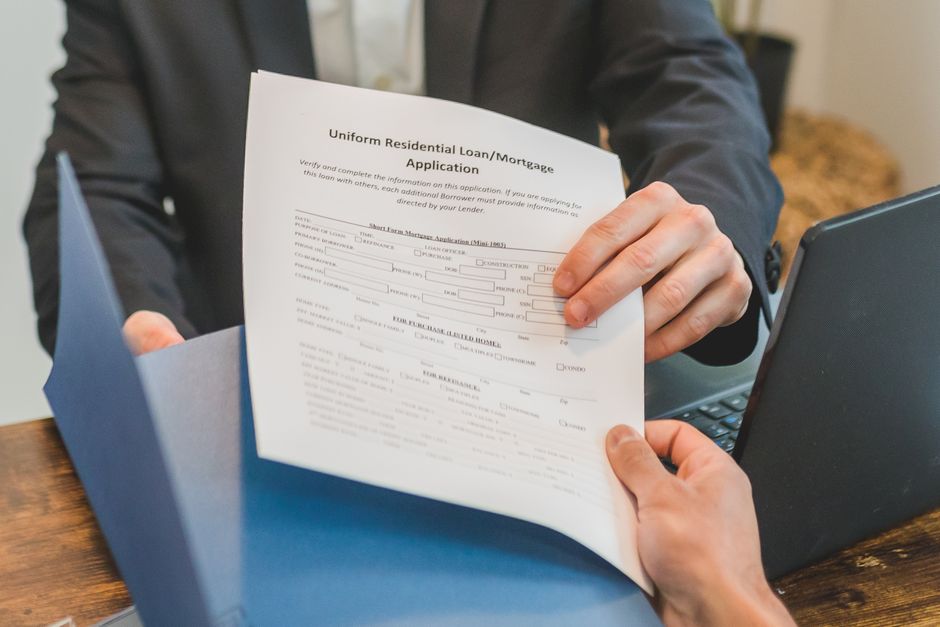
You might be wondering what the documentation process looks like in practice. Here’s what I tell people: start gathering this now, even if you’re six months from being ready to apply.
For a conventional loan, expect to provide:
- Two years of personal tax returns (all pages, all schedules)
- Two years of business tax returns if you operate as an LLC, S-corp, or partnership
- A year-to-date profit and loss statement, prepared by a CPA (not a rough spreadsheet)
- Two to three months of business and personal bank statements
- Your business license or other proof your business exists and is active
For a bank statement loan, you’ll swap the tax returns for 12 to 24 months of statements and you’ll often need a CPA-prepared letter confirming your expense ratio, which lenders use to estimate your true income from deposits.
One thing almost no one warns you about: the profit and loss statement needs to be current within about 60 days of your application. I’ve seen deals stall because a borrower submitted a P&L from January and they were closing in August. The processor will kick it back, and it costs time.
The Credit and DTI Reality Check
Self-employment doesn’t hurt your credit score directly. But the irregular income patterns it creates sometimes lead people to carry more credit card debt during slow months, and that can raise your debt-to-income ratio (DTI) in ways that complicate approval.
Your DTI is simply your monthly debt payments divided by your monthly qualifying income. If your qualifying income comes in at $4,800 per month and your total monthly debts (car payment, student loans, minimum credit card payments, proposed mortgage payment) total $2,100, your DTI is 43.75%. That’s on the edge. Most conventional lenders want 43-45% or below. Getting it under 36% will open better terms.
Worked example: A freelance software consultant in Austin earns $150,000 gross per year, but with business deductions, her net income on her Schedule C averages $88,000 over two years, or $7,333 per month. She has $480/month in student loans and a $310/month car payment. With those debts, she can afford roughly $2,510 in total housing payment (principal, interest, taxes, insurance) before hitting a 43% DTI. At current rates (as of August 2026), that supports a purchase price in the $380,000-$420,000 range with a 10% down payment, depending on local property taxes.
What Actually Helps Your Application
A few things can genuinely strengthen your position as a 1099 borrower, and a few of them go against what you’d expect.
First, reserves. Cash reserves sitting in a verifiable account after closing can offset a lot of lender hesitation about income variability. Having 6 to 12 months of mortgage payments in savings signals that you can weather a slow quarter without missing payments. The FHFA guidelines acknowledge reserves as a compensating factor, and in my experience underwriters use them aggressively when income documentation is anything less than clean.
Second, the length of your self-employment history matters more than the dollar amount. Two years is the standard floor. Some lenders will look at 12 months if you were previously employed in the same field and transitioned to freelance, but that’s a tighter path and fewer lenders will take it.
Third, consider talking to a HUD-approved housing counselor before you apply. I know that sounds like boilerplate advice, but I mean it specifically for 1099 borrowers: a good counselor has seen dozens of self-employed applicants and knows which lenders in your area are genuinely experienced with irregular income versus which ones will send you through two weeks of document hell and then deny you anyway. That distinction alone is worth the conversation.
And if you want to go deeper on preparing your financial profile before you apply, something like the Home Buying Checklist for First-Time Buyers (Amazon, and yes, the site may earn a commission) can help you organize the documentation process before you’re sitting in a loan officer’s office scrambling. It’s not a substitute for professional guidance, but organizing your paperwork before you apply is one of the highest-leverage things you can do.
Sources
- Bureau of Labor Statistics Contingent and Alternative Employment Arrangements Survey: Data on the share of American workers in non-traditional employment arrangements.
- Federal Housing Finance Agency (FHFA) Selling Guide: Guidelines governing conventional loan underwriting standards, including self-employment documentation requirements.
- Fannie Mae Selling Guide: Self-Employment Income: Specific underwriting rules for Schedule C, S-corp, and partnership income used in conventional mortgage qualification.
- HUD Housing Counselor Locator: Official resource for finding HUD-approved housing counselors by location.
- Consumer Financial Protection Bureau: Debt-to-Income Ratio Explained: CFPB explanation of DTI calculation and its role in mortgage qualification.
Photo: Tima Miroshnichenko via Pexels
This article is for educational purposes only and does not constitute financial or mortgage advice. Mortgage rates change daily and vary by lender, loan type, credit profile, and property details. Consult a HUD-approved housing counselor (find one at hud.gov) or licensed mortgage professional for guidance specific to your financial situation.
Recommended Resources
Disclosure: As an Amazon Associate, we earn a small commission from qualifying purchases at no extra cost to you. We only recommend products that genuinely support the topics covered in this article.
- First-Time Home Buyer: The Complete Playbook (~$18), The #1 Amazon bestseller in homebuying, covers down payment strategies, mortgage pre-approval, and avoiding rookie mistakes.
- 100 Questions Every First-Time Home Buyer Should Ask (~$17), Nearly a million copies sold, covers every question to ask your lender, agent, and inspector before signing anything.