 Maria Santos
Three years after a Chapter 7 bankruptcy, a woman I’ll call Diane sat across from a loan officer who slid a denial letter across the desk without making eye contact. She’d done everything right since the discharge: rebuilt her credit, saved a down payment, stayed employed. The loan officer told her she just needed to “wait a little longer.” What he didn’t tell her was that she’d actually met the waiting period requirement and that a different loan type would have approved her that day.
That story infuriates me. I spent years on the underwriting side watching people get bad information, or no information, at moments that really mattered. So let me tell you what I’d tell Diane if she’d found me first.
Bankruptcy doesn’t end your homeownership chances. It delays them. The exact delay depends on which bankruptcy you filed, which loan program you’re applying for, and what you’ve done with your credit in the meantime. Those three things determine almost everything.
- Chapter 7 filers typically wait 2-4 years before qualifying; Chapter 13 filers can apply in as little as 1 year.
- FHA loans have the shortest post-bankruptcy waiting periods of any mainstream mortgage program.
- Your credit score during the waiting period matters as much as the waiting period itself.
- A single late payment after bankruptcy can reset how lenders evaluate your application.
- HUD-approved housing counseling (free) can dramatically improve your approval odds before you apply.
The Waiting Period Is Real, But It’s Not the Same for Every Loan
This is where most people get confused, and honestly, where a lot of loan officers create confusion too, sometimes accidentally.
The waiting period clock starts on your discharge date for Chapter 7, not the filing date. For Chapter 13, it depends on whether the case was discharged or dismissed, and whether the court approved a repayment plan you completed. Those are legally different outcomes, and they affect your mortgage eligibility differently.
Here’s the breakdown as of August 2026, by loan type:
| Loan Type | Chapter 7 (after discharge) | Chapter 13 (after discharge) | Chapter 13 (during repayment) |
|---|---|---|---|
| FHA | 2 years | 1 year | 1 year (with court approval + lender permission) |
| VA | 2 years | 1 year | 1 year (with trustee approval) |
| USDA | 3 years | 1 year | 1 year (with trustee approval) |
| Conventional (Fannie Mae) | 4 years | 2 years | Not eligible |
| Conventional (Freddie Mac) | 4 years | 2 years | Not eligible |
| Jumbo (varies by lender) | 5-7 years | 4+ years | Not eligible |
A few things that table doesn’t capture: some lenders impose their own “overlays,” meaning rules stricter than the program minimum. I’ve seen lenders require 3 years for FHA when the guideline says 2. You can find a lender who follows the baseline guidelines, but you might have to shop.
If your Chapter 7 was caused by circumstances beyond your control (medical bills, job loss, a death in the family), some lenders will reduce their waiting period requirements. FHA calls this an “extenuating circumstances” exception. Getting it approved requires documentation, not just an explanation: medical records, termination letters, obituaries. The bar is higher than most people expect, but it’s real.
What “Rebuilding Credit” Actually Means Here
Helpful resource: The Total Money Makeover by Dave Ramsey is a top-rated option for this. (As an Amazon Associate this site earns from qualifying purchases.)
I thought for a long time that rebuilding credit just meant getting a credit card and paying it off. Technically true, but incomplete in ways that cost people real money.
Lenders looking at a post-bankruptcy application are reading your credit history like a timeline. They want to see that after the bankruptcy, you started fresh and showed a pattern, not a moment. One secured card opened at month 3, used lightly, paid in full every month, maybe a credit-builder loan from a local credit union around month 6, and then consistent on-time payments across both for two-plus years. That pattern tells a story. A single card opened right before you apply, with a spotty payment history, tells a very different one.
What kills post-bankruptcy applications, in my experience, isn’t the bankruptcy itself. It’s the late payment that shows up 14 months after discharge. Lenders weight recent behavior heavily. The CFPB’s mortgage resources explain how lenders assess creditworthiness, and their guidance consistently points back to the same thing: recency of derogatory marks matters more than people realize.
Target credit score for FHA after bankruptcy: 580 minimum to qualify for the 3.5% down payment option, though I’d say 620+ gives you meaningfully better terms and fewer lender-level rejections. Conventional programs want to see 620-640 at minimum, and you’ll get better rates at 680+.
Here’s a concrete example of how this plays out:
Marcus filed Chapter 7 in early 2023, discharged in mid-2023. He opened a secured card immediately, added a credit-builder loan six months later, and never missed a payment. By August 2025, his score was 634. He applied for an FHA loan, provided documentation of the discharge date, and closed on a home in October 2025 at the 3.5% down payment tier. Total time from discharge to keys: about 26 months.
Compare that to someone who waits the same amount of time but skips the active credit rebuilding. Without new tradelines showing recent positive history, many lenders will decline even if the waiting period technically cleared.
The Down Payment Math Is Different Now
Here’s something that doesn’t get said enough: after bankruptcy, your down payment does more work than your credit score in some cases.
A larger down payment reduces the lender’s risk, which can partially offset a thinner post-bankruptcy credit profile. FHA allows 3.5% down if your score is 580+. But putting down 10% instead opens the door to lenders who might otherwise pass you over. On a $320,000 home, that’s the difference between $11,200 down and $32,000 down. That’s not a small ask. I’m not saying it’s easy. But if you have the ability to save more during the waiting period, it’s worth it.
One thing I’d push back on: the common advice to just wait out the clock and then immediately apply. The waiting period is necessary, but it’s not sufficient. Use the time intentionally. Save the down payment. Build emergency reserves (lenders like seeing 2-3 months of mortgage payments sitting in your bank account). Get HUD-approved housing counseling early, not right before you apply. Those counselors are free, they know the local lending landscape, and in my experience they catch problems in a borrower’s situation that neither the borrower nor the loan officer spotted.
Chapter 13 Is Complicated (But Sometimes Faster)
Chapter 13 is the repayment plan version. You keep your assets and pay creditors back over 3-5 years. The weird twist: you can sometimes qualify for an FHA or VA loan while you’re still in the repayment plan, if you’ve made 12 months of on-time payments to the trustee and the bankruptcy court approves.
That’s genuinely unusual. A lot of people don’t know it’s possible, and a lot of loan officers don’t mention it because the paperwork is more complex. You’ll need court permission (called a Motion to Incur Debt) before you can close on a house. The trustee has to sign off. It’s not a fast process, but it can shave a year or more off your timeline.
Rosa filed Chapter 13 in 2022, entered a 5-year repayment plan. By 2024 (month 14 of her plan), she had consistent payments, a 601 credit score, and a job she’d held for two years. She found a $210,000 FHA-eligible home, got court approval to take on the mortgage debt, and closed in early 2025, still inside her repayment plan. Mortgage payment plus her trustee payments were tight, but manageable. She’d still be renting and waiting if she hadn’t known the option existed.
I don’t have great data on how often this pathway gets used nationally. But the fact that it’s possible and rarely discussed is exactly the kind of gap that HUD-approved housing counselors can help you close.
Sources
- HUD Housing Counselor Locator: Free HUD-approved counseling resources for homebuyers, including post-bankruptcy situations.
- Consumer Financial Protection Bureau, Owning a Home: Plain-language mortgage guidance, credit scoring, and borrower rights.
- FHA Single Family Housing Policy Handbook (HUD Handbook 4000.1): Official FHA underwriting guidelines including bankruptcy waiting periods and extenuating circumstances provisions.
- Fannie Mae Selling Guide B3-5.3-07: Conventional loan eligibility requirements post-bankruptcy, including waiting period rules.
- VA Lenders Handbook, Chapter 4: VA loan guidelines on bankruptcy, including Chapter 13 during-repayment provisions.
The path back to homeownership after bankruptcy is longer and requires more documentation than a standard application, but it’s not the dead end people assume it is. If you’re in the middle of waiting, use that time strategically. If you’re just coming out of discharge and don’t know where to start, find a HUD-approved counselor before you find a loan officer. Sequence matters. And if a loan officer tells you that you just need to wait longer without explaining exactly why, ask them to show you which guideline says that.
Diane, if she’d had better guidance, could have bought a house a full year earlier. That’s a year of building equity she didn’t get. Don’t let that be you.
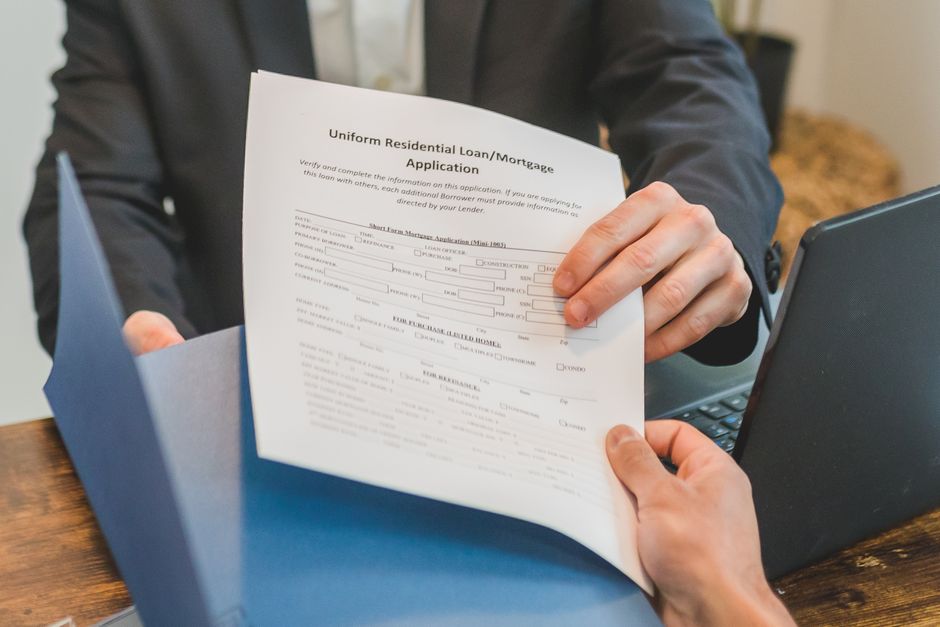
Photo: AI25.Studio AI GENERATIVE via Pexels
This article is for educational purposes only and does not constitute financial or mortgage advice. Mortgage rates change daily and vary by lender, loan type, credit profile, and property details. Consult a HUD-approved housing counselor (find one at hud.gov) or licensed mortgage professional for guidance specific to your financial situation.
Recommended Resources
Disclosure: As an Amazon Associate, we earn a small commission from qualifying purchases at no extra cost to you. We only recommend products that genuinely support the topics covered in this article.
- First-Time Home Buyer: The Complete Playbook (~$18), The #1 Amazon bestseller in homebuying, covers down payment strategies, mortgage pre-approval, and avoiding rookie mistakes.
- 100 Questions Every First-Time Home Buyer Should Ask (~$17), Nearly a million copies sold, covers every question to ask your lender, agent, and inspector before signing anything.